7/10/2009

How Many Condos are Listed in Long Beach Under $250,000?

CLW-09378967
About 4 years ago, someone left a comment/question on one of my blog posts asking where in Long Beach a condo could be found for $250,000. I don't know where that person is now, perhaps they have already taken the plunge into homeownership, but if not, now is a much better time for looking for that condo.


A search in all of Long Beach on the MLS shows 185 active listings for studios, 1, 2 and 3 bedroom condominiums at $250,000 or less. Typical of today's market, many are short sales, however opportunity knocks for the buyer who has the ability and patience to wait.
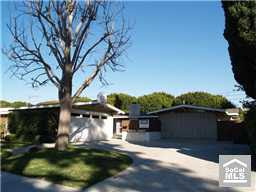
The Marina Pacifica complex shown above has several listings in the lower price range. and this photo features a listing (CLW-09378967) for a studio at $199,000 with HOA fees of $379/month.
When getting pre-approved for a condominium purchase, a buyer should be aware of items such as the HOA dues amount, number of parking spaces and their location, whether or not the building is FHA approved, building amenities, and association documents as spelled out in the contract.
In other associations, monthly fees may range from under $100/month to several hundred dollars a month, so it's important to find which associations will work for you.
Condo living is usually a closer community living than a house in a neighborhood may be. Condos are a great doorway to homeownership, and may offer an opportunity to live in a desired area that the buyer may not otherwise be able to afford.

6/30/2009

Turn An REO Fixer Into Your Palace


DID YOU KNOW . . . .
THAT the foreclosure/bank-owned property (REOs) market is shrinking? There are several reasons for this, but basically, it may be the buyer's opportunity to get a very good deal on the right property under conditions acceptable to the seller.
THAT the County of Los Angeles' HERO program works with foreclosed/abandoned properties which may be purchased with a 1% down payment, and provides down payment assistance for low-to-middle-income households, for up to $10,000 of the purchase price. This program is for single family homes up to $493,000 and condos up to $394,250. Call me for more information on approved lenders and other requirements for this program.
THAT the Good Neighbor Next Door Program through HUD helps law enforcement officers, teachers and emergency medical technicians purchase an available home, at a very large discount. Teachers must be full-time in an accredited school, other personnel must be employed by a unit of the federal, state or local government, including an Indian tribal government. Eligible buyers may receive up to a 50% discount off the HUD appraised value, as well as an extremely low $100 down payment if the buyer qualifies for an FHA-insured mortgage. This program may be used in conjunction with the FHA 203(k) program also. Contact me for more information about this program. This program is for homes in one of many of hundreds of designated areas.

THAT the FHA 203(k) Residential Rehab Loan may offer financing in conjunction with several types of buyer program (but not all) and is a great way to gain up front financing to remodel or repair the home of your choice. If you find a fixer property in an area you would like, but the house needs work, this loan is a way to accomplish those repairs within your overall mortgage qualification, so that you're not paying for repairs out-of-pocket, but amortizing them over time. Repairs may include flooring, fencing, roofing, windows, foundation, appliances, heating, A/C and termite.

Turn a fixer into a palace. These programs are just some of the ways a first-time, or return buyer, may find a new home under very advantageous conditions.

PLEASE CONTACT ME AT JULIA@JULIAHUNTSMAN.COM FOR A LIST OF HOMES THAT ARE ELIGIBLE FOR THESE PROGRAMS. NOT ALL SUCH HOMES MAY NECESSARILY BE FOUND THROUGH THE MLS. I CAN ALSO HELP POINT YOU TO THE RIGHT AREAS THAT APPLY TO THESE PROGRAMS.

6/29/2009

Long Beach Summer Park Concert Series

Long Beach Municipal Band
Summer 2009 - Centennial Concert Series
June 30th through August 14th
All concerts start at 6:30 p.m.

PERFORMANCE DATES AND LOCATIONS

WEEK 1 - (June 30 - July 3)
1909-1924: In 1909 the City of Long Beach announces the formation of the Long Beach Municipal Band! Through these early years the music of George M. Cohan, George Gershwin and other composers from Tin Pan Alley had America singing. The Studio Band and Barbara Morrison kick off the summer in style.

Tuesday, June 30 Whaley Park
Wednesday, July 1 Los Cerritos
Thursday, July 2 Marine Stadium
Friday, July 3 El Dorado Park
WEEK 2 - (July 7 - 10)
1924-1937: From the Roaring Twenties came great music like Ragtime and Dixieland jazz. George Gershwin wrote his “Rhapsody in Blue.” Even though times were tough during the 1930s it was a great time in American music. John O’Campo sings with the Studio Band.

Tuesday, July 7 Whaley Park
Wednesday, July 8 Los Cerritos
Thursday, July 9 Marine Stadium
Friday, July 10 El Dorado Park
WEEK 3 - (July 14- 17)
1937-1950: Americans danced to the music of the famous big bands such as Tommy Dorsey, Benny Goodman, Count Basie and Glenn Miller. The Swing Dolls as “The Andrews Sisters” will stop by with a special treat you won’t want to miss. Derek Bordeaux brings his high energy and soulful Motown sound to the parks of Long Beach.

Tuesday, July 14 Whaley Park
Wednesday, July 15 Los Cerritos Park
Thursday, July 16 Marine Stadium
Friday, July 17 El Dorado Park
WEEK 4 - (July 21 - 24)
1950-1965: Duke Ellington records with the Count Basie band and Ella Fitzgerald records eight records making up the “Great American Songbook.” Elvis Presley, the “King of Rock ‘n’ Roll” has three records which sell over one million copies. Our own first lady of song, Barbara Morrison, returns for a second set with the Studio Band.

Tuesday, July 21 Bixby/Bluff Park
Wednesday, July 22 Los Cerritos Park
Thursday, July 23 Marine Stadium
Friday, July 24 El Dorado Park
WEEK 5 - (July 28 - 31)
1965-1979: From the Beatles and Stan Kenton to John Williams and Stevie Wonder the tumultuous ‘60s and ‘70s produced an overwhelming variety of musical genres. During this remarkable time The Carpenters started their singing careers at Cal State Long Beach. Carol Welsman sings with the Studio Band.

Tuesday, July 28 Bixby/Bluff Park
Wednesday, July 29 Los Cerritos Park
Thursday, July 30 Marine Stadium
Friday, July 31 El Dorado Park
WEEK 6 - (August 4-7)
1979-1995: The 1980s continued to bring major changes in the music scene; the invention of the CD and MTV! In musical theater, Phantom of the Opera attracts record audiences. "Porgy and Bess" finally receives its acceptance as world class opera with its first performance by a major company, The Metropolitan Opera. Jackie DePiro sings with the Studio Band.

Tuesday, August 4 Bixby/Bluff Park
Wednesday, August 5 Los Cerritos Park
Thursday, August 6 Marine Stadium
Friday, August 7 El Dorado Park
WEEK 7 - (August 11-14)
1995-2009: Now it’s our time after 100 years of music. We look back on the unbelievable musical journey of the Long Beach Municipal Band and salute all who have come before. During this final week of the 2009 summer season you will hear the latest and greatest music of the stars of today performed by one of the finest community bands in the history of our nation - your Long Beach Municipal Band! Tony Galla will have the park up and dancing for a super finale with the Studio Band.2009.

Tuesday, August 11 Bixby/Bluff Park
Wednesday, August 12 Los Cerritos Park
Thursday, August 13 Marine Stadium
Friday, August 14 El Dorado Park


History
The Long Beach Municipal Band is one of the most distinguished and professional Municipal Bands in the United States. The player personnel in this wonderful ensemble includes the best of the Southern California's symphony, studio recording and jazz performers. This diversity of talent provides Long Beach audiences with impressive concerts of jazz, movie, musical and light classical literature. The Band also combines with talented guest vocalists weekly to guarantee that your family's summer evening in the park will be the highlight of the week.

The Long Beach Municipal Band has been entertaining area residents for 99 years. Its history is well known and appreciated not only in this community but also in music circles around the world. Present conductor Larry Curtis continues a tradition of musical excellence established by such notable conductors as the famous Sousa cornet player Herbert L. Clarke and composer J. J. Richards.

6/25/2009

How To Avoid the 10 Most Common Mistakes Sellers Make

If you are thinking of selling, you should keep these things in mind. They are not new, but sellers often overlook things they think are not important, when nothing could be further from the truth!


6/24/2009

How Does an Owner Cope with a Coastal Property Near Rising Water Level?


If you live in California, and Southern California in particular, your property may be near the coastal areas and at or near sea level--and therefore closer to the water table levels. At certain times of the year there are annual high tides, i.e., the one seen almost up to the asphalt level of Pacific Coast Highway through Huntington Harbour.

Houses with basements, or more likely crawl spaces under the raised foundation, may show signs of moisture or even flooding. This is dealt with by creating sumps--or holes in the ground to collect water--and installing sump pumps. The pumps may be set up with connectors (i.e., a hose) to carry the water off the property, via drains, or whatever method complies with local codes.

While a buyer should obtain professional assistance about the best type and system to install, if you're buying property almost level to the water, don't be surprised to find out you may have to deal with this.

In more extreme cases, you may want to find out about subsidence and call in another expert. You will want to review the natural hazard disclosure reports, and even local flood zone reports available online through FEMA. Also, be aware that if the property is in a specific FEMA flood zone, additional insurance may be required before your lender will fund your new loan, or otherwise require you to obtain the additional insurance if you already own the property. You may be able to obtain an elevation certificate issued by a qualified surveyor if your property sits at a high enough elevation.
For more information about contacting an appropriate local professional, please feel free to give me a call.

6/22/2009

Are You Looking Into Selling Your Property as a "Short Sale"?


Although the terms "short pay" or "short sale" are heard frequently, some people are still asking what they mean: It means the property owner owes more on his/her property than it can be sold for, or sold for after paying all the standard closing costs. In other words, the seller is "under water". Briefly, the mortgage holder(s)--there may be more than one loan on the property--must agree to accept the lower payoff amount, which means the bank is losing money on the seller's outstanding loan amount. The owner must "apply" for that approval by submitting financial information and a written statement about the reasons for their situation. As more and more properties are involved in this situation, some banks are finally, at long last, gaining some level of efficiency at dealing with all the short pay applications. Guidelines for the seller include submission to the bank of a signed and dated financial worksheet (usually in a standardized format), and signed and dated hardship letter, as well as a copy of the listing agreement, and letter of authorization for the party helping you with your short sale to communicate with the bank about your loan.

The sale generally must be an "arms-length" transaction; you cannot sell to someone you have a close personal relationship with, i.e., family member, personal friend, even a neighbor.

Different banks have different approaches about when to best receive submission of the seller's package for approval; and these approaches have changed from one time period to another, even in the last several months, so it may be difficult to know what to expect. Some mortgage holders will want the seller's package up front; other banks seem to respond faster when an offer has been obtained and is sent with the seller's package so that the seller's package does not "sit" at the bank and get lost.

The contract terms between the buyer and seller is negotiated as if it were a normal sale, but it's important to note that all disclosure about the short sale status must be given, and the buyer must in almost every case be willing to wait at least 60 days for the entire process. Even though the bank is not the seller, its role is key in whether the property gets sold and for what price. And, the bank will want an accounting of all costs of sale, and may not approve certain costs in order to preserve its bottom line. Banks have also been known to "approve" in advance a certain amount as the selling price, hoping that a buyer will be found at that price and they will therefore lose less money, but the market may decline, so the actual selling price may be less the longer it takes to find a buyer, or the approved price may not be realistic for the specific area of the property.

The Obama Administration will soon be issuing short sales guidelines and standardized forms--the outcome for all lenders to participate is yet unknown. It is hoped these guidelines will prevent future unrealistic negotiations among all parties, and faster treatment of short sales to assist stabilizing the real estate market.

As more loans entered into 2-3 years ago come up for their reset dates, the short sale process will continue to be a "staple" in the market, making a more uniform process mandatory. Some areas are completely dominated by either short sale/pre-foreclosure properties on the market, or bank-owned properties that have already been through foreclosure.

Any seller contemplating this as the only possible way to sell their property should also seek any legal and tax advice at the same time, especially if also contemplating bankruptcy.

Short sales generally have less impact on one's credit (assuming there are no or very few missed mortgage payments) than does a foreclosure, which will stay on the credit report for a much longer period of time and be a more severe "hit". Even with the FICO hits of missed mortgage payments, a short pay may be preferable for several reasons, including that the IRS has allowed debt forgiveness on mortgage amounts involved in the short sales. Foreclosure carries a longer period of impact on one's credit, something to think about when FICO scores are used in insurance applications, employment promotions, and of course, credit application.

There are many related and complex issues with these situations, and much confusing information which seems to change or modify on a monthly basis, and even legal and tax advisors are not totally familiar with impacts on credit scores in these two situations. For the most accurate information and opinion, contact a reliable loan professional who is in contact with borrower's credit reports on a regular basis.

More recently, per National Association of Realtors website:

On May 14, 2009, the Obama Administration announced its upcoming Foreclosure Alternatives Program, expected to launch in late July. Among other things, the new program:

Establishes financial incentives for servicers, sellers, and second lien holders to encourage the completion of short-sale transactions.

Requires that a timeline, of no fewer than 90 days, be set to allow a homeowner to sell a home, without threat of foreclosure action.

6/16/2009

What's For Sale in Long Beach under $300,000?


This is a popular price range for many 1st time buyers, the group of people who are among the most active and largest group of buyers looking on the market now.

In 2007 in Long Beach, there were less than 350 residential condos, own-your-owns, coops, and single family properties in this price range. Last fall, the inventory doubled to more than 700 listings in this group.

As of June 16, the MLS is showing 430 properties in this category: 185 active listings are single family homes under $300,000 in various zip codes (but not 90803 or 90814). In a sampling of the first 25 on the list, 19 of them are short pay or REO properties. In the last 25 on the list, 23 out of 25 are short pay or REO properties.

For condos, co-ops and own-your-owns (lofts excluded), there are 241 condos, etc., with about the same percentage of REOs and short pays: 21 out of first 25 on the list. The difference with condos is that they also represent many areas of town, including 90803, 90815, 90814. But not all condo opportunities are alike: Be prepared to face monthly HOA dues of as much as $600 for Marina Pacifica, where there have been several such sales. The price may be low, but the monthly payment must be able to accommodate the association expenses.

For the buyer who is heading out on a home search with their REALTOR, and with a valid mortgage pre-approval in hand, be prepared, because due to shrinking inventory, lower sales prices, and many other first-time buyers, you may have severe competition and deal with many multiple offers on the property you would like--some houses in particular have seen over 30-50 offers--and only one will be chosen. And, a frustrating fact is that that buyer may be an investor with lots of cash, or all cash. Also, the qualified FHA buyer, with 3.5% down payment, may have a much harder time competing, not just because of their lower down payment, because FHA offers must be appriased by an FHA appraiser who is required to report on certain property conditions according to government guidelines.

If the FHA buyer is considering a condo, which will probably be somewhat less competitive than a house, there are still HOA requirements to be met under FHA guidelines. Ideally, the buyer will select a property in an association that is already FHA-approved under the HUD guidelines. (Ask me, I can help you find out.) Otherwise, the buyer must hope for a "spot" approval, and that may have a more uncertain outcome until the transaction is further along in escrow and underwriting approval is obtained.

So what can the buyer do in this situation? Try to find a property that will work for you and with your loan, maybe a property that is getting less attention from other buyers. It may be your golden opportunity. It may require patience, it may require imagination, and it may not have granite countertops in the kitchen to start, and it may require some compromise on some of your criteria, but in the end if you want to be a homeowner, you have to start somewhere, and the gains could be very great in the end.

For a specific list of properties to be sent by e-mail, please contact me, OR go to http://www.juliahuntsman.com/ to see various current property searches from the MLS.

6/11/2009

What's In An Appraisal for All Parties?

You might think "HVCC" refers to a heating system, but no, it refers to property appraisals performed under the new Home Valuation Code of Conduct. This Code came about through the New York State General Attorney Andrew Cuomo's agreement with FNMA and Freddie Mac and the Federal Housing Finance Agency, those agencies that create the rules for loans that buyers need.

What it means for the buyer and the seller both is that conventional loans obtained for single family homes fall under this new appraisal code. (Not for FHA loans.) Appraisals have always been important: the lender did not want to loan on a property which did not match a true market value. Diligent Realtors have always advised sellers to price their properties realistically, and advised their buyers of a realistic selling price according to local market comparables, in essence, the property had to be sold twice, once to the buyer and again to the lender. The subprime market blurred this picture for quite a while, but sometimes the cure is just as bad as the problem.

To counter the effects of the subprime market, effective May 1, neither lenders nor their staff are allowed to select the appraiser, nor are they allowed to have "substantive" communication with the appraiser or the appraisal management company (AMC) which now is the new level of bureaucracy managing the assignment of appraisers. The new system may have started more problems than it ended.

Some assigned appraisers may not be familiar with an area--coming from a different county even--have no particular vested interest as to the outcome of the appraisal, consumers are being advised their appraisal will cost about $100-$150 more and they may have to lock in their rates for a longer period of time, which will also cost them more. If the consumer changes lenders, they must pay for an additional appraisal. The AMCs pay low fees, thus attracting only the inexperienced appraisers, some of whom are failing to adequately appraise a home. See The Wall Street Journal's article on this.

The AMCs are unregulated, and do nothing the reduce fraud (the reason they were established in the first place), and transactions are being cancelled in some instances, at a great cost and inconvenience to both the buyer and seller. One professional association estimates that HVCC will cost consumers 2.8 billion dollars a year in extra fees.

These issues make an already form-and-disclosure-intensive transaction even more challenging and difficult under increasingly stringent legal and professional standards, especially in California which has the reputation of being a very litigious state. But I'm sure professionals in Michigan, for instance, probably feel the same way.

Now is the time to know your market, and be prepared to address a possible appraisal gap as a "Plan B" to closing escrow, which could mean that if the difference is not too great between appraisal and contract price, that buyer and seller split the difference. Not great, but it could be an option to not meeting the closing date.

6/08/2009

The Cost of Waiting to Buy Revisited


Six months ago (they've passed quickly), I covered this topic via an article by Pat Zaby complete with payment scenario.

Last week's upset in the Treasury bond market , a more complex subject, ultimately sent mortgage interest rates up, with higher payment impact, that the earlier post referred to:
Let's make an assumption that the prices may still decline 5% more before they start appreciating again. If while a buyer was waiting for the price on a $250,000 to go down 5% to $237,500, and the interest rate goes up one percent from 5.25% to 6.25%, which is entirely possible, the buyer's monthly payments will increase almost $79 per month.
Or putting it another way, some buyers who qualified before last week may now have lost as much as 10% of their original buying power. In fact, some mortgage professionals feel that because of the current economic forces driving the purchase of bonds vs. mortgage-backed securities, the edge on low interest rates--below 5%--is gone, and maybe gone for good. If you're just starting in the market, figure it's the luck of the draw. But if you've been looking for a very long period of time, or renewing your search after being away from it for a long time, your loan information probably needs to be updated.
One brighter spot is that the procedure is being put in place for the imminent start of a statewide down payment assistance program offering a "silent second" for first time homebuyers (up to 3% of purchase price, income restrictions apply, FICO score over 680) and which may be used in conjunction with the FHA 3.5% down payment. If you're in that category, you might still be ahead if you fit this program.

See my earlier post on waiting to buy.

6/02/2009

$8,000 Tax Credit is Once Again a Help With Costs for 1st Time Buyers

There has been much confusion in the past several weeks about using the credit for a down payment, as HUD announced a tax credit but then rescinded the offer.

Now, the latest information from HUD (May 29th) is now that the $8000 tax credit for FHA borrowers "may not be used to meet the 3.5% minimum downpayment, but may be used as additional downpayment, buying down of interest rate, or other closing costs." The HUD credit may not be used in place of your 3.5% down payment, but you may use it to cover closing costs, or as a loan through specified programs set up by lenders.

This is a great opportunity for first time buyers to buy real estate in the Long Beach area with additional some financial assistance!

Give me a call to learn how to utilize this program to your best advantage!

5/18/2009

Back to Reality--No Using the $8000 Tax Credit for Down Payment

This has already been addressed in many other quarters, but just for the record, I'm including it here: Apparently, the HUD letter ML 09-15 has been rescinded as of last Thursday morning because it violated a federal law effective as of October 1, 2008, and now there's just a big blank space on NAR's site where the announcement used to be. The fact is, FHA loans do not allow for down payments that in themselves are loans, but may allow for gift down payments from certain sources as spelled out in FHA guidelines.

So the $8000 credit-as-down-payment is NOT going forward. And, for the ML 09-15 proposal to occur, there would have to be in place:

--State agencies approved WITH MONEY for the downpayment
A change to the HUD guidelines on the timeframe that is allowable for a loan….currently must be amortized over 10 years with no balloon.
--A change to the IRS guidelines allowing your refund to be assigned to a state or non-profit entity.
Source - Tara Ryan, Primacy Mortgage

In the meantime Buyers, you have until December 1, 2009 to otherwise utilize the $8000 tax credit.

5/14/2009

California's New Home Tax Credit for $10,000

Announcement from California Association of Realtors: (NOTE: As of this morning, well over half of the $100,000,000 funds for a new home purchase are now committed, although not paid out. Buyer must close escrow, and then apply with 7 days after close of escrow.)

"This tax credit is available for qualified buyers who on or after March 1, 2009, and before March 1, 2010, purchase a qualified principal residence that has never been occupied. The buyer must reside in the new home for a minimum of two years immediately following the purchase date.

"The FTB began accepting applications for allocation of credit by fax only (916.845.9754), on March 1, 2009. They began processing the applications on a first-come, first-served basis, on May 1, 2009. The processing delay was necessary to allow them time to develop a system to capture and verify the application information, allocate the credits, and send the credit allocation letters. It will take at least a few weeks to process all the applications they received and mail credit allocation letters. Please be patient and do not send applications more than one time.
California allocated $100,000,000 for this tax credit. Buyers must apply for credit allocation from the FTB. They will review applications and allocate credit on a first-come, first-served basis. Once $100,000,000 has been allocated, the tax credit will no longer be available. They expect to report total credit allocations allowed beginning May 15. Until then, they will continue to report data on applications received. "

Doesn't the fact that over half the funds are now committed since March 1 show the increase in buyer purchases?

5/13/2009

First Time Buyers: $8,000 Credit May be Used as an FHA Loan Down Payment

First-time homebuyers: Get the fast road to your $8,000 tax credit. Shaun Donovan, secretary of Housing and Urban Development (HUD) announced on May 12 that Federal Housing Administration (FHA) will allow its FHA lenders to allow homeowners to use the $8,000 tax credit as a down payment.

Secretary Donovan said.

'We all want to enable FHA consumers to access the home buyer tax credit funds when they close on their home loans so that the cash can be used as a downpayment.' According to Donovan, the FHA’s approved lenders will be permitted to “monetize” the tax credit through short-term bridge loans. This will allow eligible home buyers to access the funds immediately at the closing table.

Rather than waiting for refunds after the closing, funds will be available at the closing. A second mortgage will be filed and repayment terms will vary. It is important to keep the home as a primary residence for at least 3 years.

Q&A summary of other requirements for this credit:

Who Qualifies?
First-time home buyers who purchase homes between January 1, 2009 and December 1, 2009.
To qualify as a "first-time home buyer" the purchaser or his/her spouse may not have owned a residence during the three years prior to the purchase.

Which Properties Are Eligible?
The 2009 First-Time Home Buyer Tax Credit may be applied to primary residences, including: single-family homes, condos, townhomes, and co-ops.

How Much Will the Credit Be?
The maximum allowable credit for home buyers is $8,000. Each home buyer's tax credit is determined by two factors:
a) The price of the home-the credit is equal to 10% of the purchase price of the home, up to $8,000.
b) The buyer's income-single buyers with incomes up to $75,000 and married couples with incomes up to $150,000-may receive the maximum tax credit.

If the Buyer(s)' Income Exceeds These Limits, Can He/She Still Get a Credit?
Yes, some buyers may still be eligible for the credit.The credit decreases for buyers who earn between $75,000 and $95,000 for single buyers and between $150,000 and $170,000 for home buyers filing jointly. The amount of the tax credit decreases as his/her income approaches the maximum limit. Home buyers earning more than the maximum qualifying income-over $95,000 for singles and over $170,000 for couples are not eligible for the credit.

Will the Tax Credit Need to Be Repaid?
No. The buyer does not need to repay the tax credit, if he/she occupies the home for three years or more. However, if the property is sold during the three-year period, the credit will be recouped on the sale.

5/05/2009

Properties are Selling in Long Beach 90803

The buyers have gotten in the Spring action mode in Long Beach's 90803 zip code--and for some buyers, there are issues of multiple offers in certain parts of Long Beach within days of the property coming on the market. This is a result of the combination effect of sellers pricing their property correctly, presenting it well (even staging it, that's been betting the fastest offers), and buyers who are pre-approved and motivated to buy.

In a quick review of the MLS, in the 90803 zip code (Naples, Belmont Heights, Belmont Shore areas), there are 101 active single family home listings waiting for a buyer, and there are 30 single family homes currently in escrow, list price between $425,900 (Island Village) to $3,350,000 on the water with a boat dock (Naples)--days on market ranged from "0" to "395".

In the same area are 54 condos waiting for a buyer, ranging from $189,000 to $1,095,000 in complexes such as Marina Pacifica, Village on the Green, Bixby Village, Spinnaker Cove, and in areas of Naples, Bluff Park, the Peninsula, and Belmont Heights. There are 19 condos in escrow, ranging up to $669,000 in asking price, having been on the market from 3 days up to 364 days.

For motivated sellers, believe it or not, we need more inventory. If you would like a market analysis of your home or income property, at no obligation, there's nothing to lose by talking over the current value of your home. I can even send you market comps via e-mail, plus other valuable market information.

Prices are still low, and motivated buyers should check out their financing options now.

To find more Bixby Village properties on the market, go to Long Beach Condos, Lofts and Associations, which is updated through the MLS, so you will get current information on which listings are on the market.

4/27/2009

California Market is Speeding Up

California Association of Realtors report for March, 2009, shows a 63% increase in sales and an increase in statewide median price of 2.2% over February, 2009. The unsold inventory index fell to 5 months overall, compared with 12 months one year ago.

"The statewide median price showed the first monthly increase since August 2007, and has remained in the $250,000 range over the past three months," said C.A.R.'s Chief Economist Leslie Appleton-Young. "A number of regions around the state also have registered monthly gains for one or more months since the beginning of this year. While these are welcome signs, it remains to be seen whether home prices have stabilized.
"While we still face continued weakness in the general economy and expect continued foreclosures, the increased incidence of multiple offers indicates that first-time home buyers and investors are responding to dramatically improved housing affordability. Low mortgage rates and house prices, coupled with the federal first-time home buyer tax credit, is having a definite impact on the California housing market," Appleton-Young added.

The existence of multiple offers on residential property is reported by numerous local buyers I've talked to in the last few days in the Long Beach area, and the decline in local inventory has been very evident. Properties that are strong in curb appeal, or are staged, are getting the fastest response from buyers.
Another indicator is the number of day on market: statewide, 8 day less that this time last year to sell.

4/23/2009

Making Home Affordable for YOU


President Obama's $75 billion program for homeowners now has the first six banks or participants, per the Los Angeles Times:


Chase Home Finance, part of JPMorgan Chase Co., will receive up to $3.6 billion, the largest amount among the six companies. The other recipients: Wells Fargo Co., GMAC Mortgage Inc., Citigroup Inc.'s CitiMortgage unit, Select Portfolio Servicing and Saxon Mortgage Services Inc.

More banks and companies will be added in the coming months. The Making Home Affordable program can be found at FNMA and Freddie Mac sites for those with FNMA or Freddie Mac loans. By clicking on the above link, the homeowner can find out eligbility for the program. This program is for owners who are not able to meet current refinancing loan requirements, who bank is participating and who who have FNMA or Freddie Mac loans.

This plan is to help people who are current on their mortgage payments to refinance and take advantage of today's lower interest rates. Under this plan, Fannie and Freddie will be allowed to refinance qualified homeowners up to a 105% loan-to-value of the CURRENT VALUE of the home. It's well worth your time to keep checking on whether or not your current mortgage and your bank, now or in the future, will be one that qualifies for this plan.

The plan helps owners at risk of foreclosure by offering government assistance to help offset the cost of modifying loans of qualified homeowners into affordable mortgages allowing them to keep their homes. There are several different ways to achieve this: rate reduction; extending loan term, or allowing principal forbearance or cramdown. The unpaid balance must be $729,750 or less for owner occupied primary residence of 1-4 units, a first trust deed, current monthly payment exceeds 31% of gross monthly income, are among the requirements. Go here for a self-assessment tool.

If you are thinking of selling, or you need more information about whether or not you can modify your loan, or are eligible for a short pay, contact me directly or go to http://www.juliahuntsman.com/.
.

4/21/2009

More Demand, More Sales--More Sales, More Buyers and Sellers


In spite of the billions of dollars spent and given away to Freddie Mac, Fannie Mae plus numerous other banks and institutions, in spite of the many government loan modification programs and federal homeowner help programs, loan streamlining programs ... but so many buyers are still reluctant to buy. Yes, there are more limitations on types of loans available, basically buyers have a choice between 3.5% down payment (FHA), 10% and 20%+ down payment loans (conventional). There are some first time buyer programs, there are still VA loans, but most buyers are going to fit in the middle of the distribution curve on the first 3 types of opportunities.

There needs to be even more incentive(s) if there is to be a return to a real estate market where there are properties closing escrow with move-up buyers. Why, especially in California which is still a higher-priced market than other states, should only first-time buyers under a certain income level be eligible for the $8000 tax credit? Why not make it available to anyone who purchases a home? or an investment property? I've been meeting people lately who have certain assets, sense that the bottom of the market may be getting closer but they're still unsure, and this credit might give them the incentive to finally make the move off the fence.


Another suggestion has been to put a moratorium on the capital gains tax for future sales of residential property purchased in 2009 and 2010 which might encourage these capable but indecisive buyers to finally make a move into the market. Yes, a strong increase in sales has been occuring in 2009, but it's also at the lower end of the market. Think of the buyer who might otherwise put an offer on a high end property if these other incentives were in place.

4/16/2009

Free Southern California Home Buyer's Fair this weekend April 18th

Bulletin just in:

Thousands of potential home buyers are expected to converge this weekend for the Southern California Home Buyer’s Fair at the Los Angeles Convention Center in downtown Los Angeles. Sponsored by California Association of Realtors and the “Los Angeles Times,” the second annual Southern California Home Buyer’s Fair is open from 10 a.m. to 5 p.m. Saturday, April 18, and 11 a.m. to 4 p.m., Sunday, April 19. The event is free to the public. In addition, the first 200 attendees each day will receive a free movie ticket (one ticket per person).

The Fair features more than 50 educational “how-to” seminars designed to help home buyers navigate today’s real estate market with confidence and peace of mind. Seminar topics range from monitoring and fixing credit, finding and applying for a mortgage, to purchasing a foreclosure, short sale or REO. Several of the sessions also will be offered in Spanish. The Southern California Home Buyer’s Fair (www.homebuyersfair.com) also will feature nearly 75 exhibit booths, where attendees can obtain information from industry experts about homeownership and the home-buying process.

For a home search through our SoCalMLS expanded home search of all types of properties, please visit my other site at www.juliahuntsman.com

4/14/2009

Rent vs. Buy in 2009

Now that tax time finally over, it's a good time to get into the rent vs. buy scenario for 2009.

Buyers who close escrow early in the year are likely to have greater benefit from tax deductions for 2010. In the current market, buyers are seeing opportunity that has not been theirs for several years. This slide from California Association of Realtors shows the total tax liability difference over 5 years between renters and buyers, taking into account the $8,000 tax credit, mortgage interest and property tax deductions. The overall tax liability savings at the end of five years for the buyers is over $11,000.

The $8,000 buyer tax credit must be taken advantage of before December 1, 2009. This credit is a great tax advantage in the first year of ownership--don't miss out!

4/08/2009

Homeowner Affordability and Stability Plan Loan Terms

There is a lot of confusing information about loan modification opportunities, plus the additional fact that unqualified companies or individuals are attempting to take advantage of borrowers. Before you go with an offer you receive in the mail, please get a second opinion by calling up a known lender or contacting a bank officer, or your REALTOR. There are modification programs for both FHA and conventional loans, the following applies to conventional loans. So here, courtesy of Prospect Mortgage in Irvine, is better information and a link to a government website:

The Homeowner Affordability & Stability Plan

On February 18, 2009, President Obama announced his Homeowner Affordability and Stability Plan. The plan has two primary components:

Low-cost Refinancing. To be eligible, the loan on the property must be owned or securitized by Fannie Mae or Freddie Mac. These loans cannot exceed 105% of the home’s current market value. The Fannie Mae and Freddie Mac loans will have no prepayment penalties or balloon payments. There are no refinance cash-outs. Borrowers who are currently delinquent or have been 30 days overdue more than once during the past 12 months will not qualify.

Loan Modification. If you wish to inquire about a loan modification, you may contact the company that is currently servicing your loan. To be eligible, homeowners must be at risk of default or foreclosure. Qualified participants must also have experienced financial hardship, including loss of income, a significant increase in expenses or an interest rate that will reset to an unaffordable level. Monthly mortgage payments (including principal, interest, taxes, insurance and homeowner's association dues, if applicable) must exceed 31% of gross monthly income. The unpaid principal balance on the home loan must be equal to or less than $729,750 for one-unit properties (there is a higher limit for two- to four-unit properties).
If there’s a second loan, only the first mortgage is eligible for a modification, and it must have been originated on or before January 1, 2009. Qualifying loans include those owned or securitized by Fannie Mae or Freddie Mac. The government is working on getting other loan servicers to participate by offering substantial incentives.

If you want to find out if your loan is owned or securitized by Fannie Mae, you can call 1-800-7FANNIE, or visit www.fanniemae.com/loanlookup. Freddie Mac may be contacted at 1-800-FREDDIE, or by visiting www.freddiemac.com/mymortgage.
To learn more about the Homeowner Affordability and Stability Plan, visit www.makinghomeaffordable.gov.

4/06/2009

Long Beach Selling Trends for March 2009


Has your idea of a new home taken root? You might find this interesting:
The overall picture for Long Beach from February 7-March 3, 2009, is that the inventory for residential properties continues under 6 months, meaning that it would take that amount of time for the current number of listings to sell before all properties would be sold, or off the market. Inventory supply for the current period climbed up to 4.6 months (from 3.5 months from the prior month).

In the pool of eight areas--Lakewood, Cypress, Cerritos, Los Alamitos, Long Beach, Signal Hill, Rossmoor, and Seal Beach--Long Beach is in the middle in terms of inventory supply, with Lakewood having the lowest amount at 2.3 months, and Seal Beach at the highest with 11.9 month. Just a reminder: a classic real estate "benchmark" is that 6 months of inventory is the turning point for a buyer or seller market, thus by definition the first 6 in the list are in a seller's market at this time.

But is that true for all price ranges in Long Beach, and all neighborhoods? No, overall, residential properties under $700,000 have less available inventory, with the $400,000-$600,000 going the fastest at 4 months and less.

Areas with the longest months' supply is Belmont Shore/Heights/Naples (90803) at 8 months, and downtown/Ocean Blvd. (90802) at 6.6 months. The other major zip code areas in the city were less than six months, with Carson Park/El Dorado Park Estates/other east Long Beach areas (90808) having the least amount of inventory available at 2.4 months. Does this correspond with selling price? Well, the 90808 zip code area, with the least amount of inventory, sold in the upper half of price-per-square foot range at $331, while 90813 sold at the low end of $203 per sq. ft.

For a copy of the complete report via e-mail, please contact me with your information, and I'll be happy to send it.

In comparison to this time last year, Long Beach was second highest in terms of inventory supply at 8.7 months, second only to Signal Hill, and all price ranges except one was over 6 months. In this period 2008, Long Beach was second highest in price per square foot at $409, and is now 3rd highest at $348 per sq. ft.

Yes, it's very much a "pricing reality" message for sellers, and a "get moving" time for motivated buyers who would like to avoid the multiple offer situation as much as possible.

Currently, in terms of number listings, there are 71 single family residences listed in 90808, and 86 condos and single families in 90813 (parts of downtown further inland from the shoreline).

To find more properties on the market, go to http://www.juliahuntsman.com for an easy property search.

4/01/2009

CalSTRS Loans Allow for 3% Down Payment

Sacramento headquarters


These are great loans for employees of the California public school districts or California community colleges--and, being a first-time buyer is not a requirement. This program is for any employee, and is not restricted to teachers only.

The 80/17/3 program means the buyer's down payment is 3%, and the 2nd trust deed is the 17%. The interest rates on the 1st and 2nds are the same, and right now they are at 5%. A borrower can take out 50% of what is in their account, and the FICO score requirement on the 3% down is 620.

Buyers, if you belong to STRS, these are great opportunities. Other than FHA and VA loans, there are virtually no other opportunities for low down payment programs. And while currently an FHA loan may be allowed as high as $729,750, the maximum CalSTRS loans go as high as $650,000 which is still very competitive for many Southland and Long Beach areas, and certainly for much of the condominium market.

For a conforming sales price of $521,250, 1st loan amount of $417,000 and 2nd of $88,612, borrower's 3% down payment, the principal and interest at the current 5% interest rate would be $2238.55 (excluding property taxes and insurance, no payment on the second for 5 years).

One year ago the rates were 6% and that same loan amount scenario required a P&I payment of $2538, or $300 more.

For loan amounts over $417,000 up to %650,000, interest rates are currently at 6%

Rates are current as of today, April 1.
To find a lender doing STRS loans in the Long Beach area, please contact me.
562-896-2609


3/27/2009

Sales Trend is Getting Stronger in Long Beach Area


If you saw the post from earlier in the month, you read about the strong decline inventory in Long Beach for February 2009 to 6 months and under, especially compared to the same time last year (data courtesy of RealDataStrategies and the SoCalMLS). The chart at the right shows the upward movement (although I don't believe "median price" data is necessarily applicable to all local areas or neighborhoods due to many other conditions). There's additional news around about some 2008 markets actually increasing over 2007, per Anthony Carr's post at Realty Times, including:

"Texas - 3.6 percent, South Dakota – 3.6 percent, Montana – 2.6 percent, Mississippi – 1.7 percent, Utah - 1.5 percent, New Mexico - 1.3 percent".
This data comes from a Bloomberg.com report using data by FirstAmerican CoreLogic, based in Santa Ana, California.

And, per Dataquick's March 19 report for California statewide sales, the increase has been going on here for the last 8 months, while the median price remains stable:


"An estimated 29,225 new and resale houses and condos were sold statewide last month. That was down 0.8 percent from 29,458 in January and up 42.5 percent from 20,513 for February 2008. Sales have increased on a year-over-year basis the last eight months."

Dataquick's report for February for Southern California: "Sales have increased on a year-to-year basis since last July."


"The market is so tilted away from normal mainstream activity that it's impossible to generalize or predict based on the atypical patterns we're seeing. That means that normal demand and supply is building up. The floodgates could open once mortgage credit starts to open up," said John Walsh, MDA DataQuick president.
Further, in the Long Beach area, February of this year is reportedly 3rd highest in sales after October and November of 2008. And today, Freddie Mac states mortage rates are near or at the bottom, and any further reductions would be "incremental". Rates for 30-year fixed mortgages are at 4.85%, the lowest in its history of surveys which began in 1971, "down a full percentage point from a year ago", and rates for a 15-year fixed mortgage dropped to 4.58%.

With constant repetition in the media about foreclosures and the hard times of many, it's hard for buyers to believe that by waiting, they can be waiting too long for their area. If the current decline in housing inventory persists, the competition scenario is likely to emerge at some point in time in certain areas, in fact it already has for some properties judging by the show of hands at last Thursday's broker meeting from agents dealing with multiple offers for their clients.

3/23/2009

Homebuyer's Remorse and Does It Go Away?

I'll get straight to the answer: Yes, if you work at it, in about 6 months (for many people). It starts going away after you begin to get used to your new monthly payment, fall out of love with the property and see it through normal clear lenses, and realize that in fact you did look at other houses, but you chose the one you're in. The operatives words here are: "you chose the one you're in", because after all, in California in particular, there are many contingencies, many opportunities to review disclosures and reports and ask questions, review the seller's disclosures and approve or disapprove them, plus have a full contingent 17-day period in which to cancel without losing more than the cost of your physical inspection. (You did get one, right?)

Yet people like to play a little game, and somehow minimize, or even erase, their part in the decision-making, or worse yet, lie to themselves: "The self-interested devil made me do it." Well, we all do a little of that at one time or another, it takes the pain away, but if you're really grown up about yourself, you finally and quickly wake up and stop kidding yourself.

Webster's dictionary defines remorse as: "A gnawing distress arising from a sense of guilt for past wrongs." So how can you minimize this period (because it's bound to happen to one degree or another)?
  • Did you buy this property after you thoughtfully considered your needs and desires, or did you buy it to please someone else?
  • Did you take the time during escrow to really review your documents and ask questions.
  • Did you drive the neighborhood or talk to neighbors?
  • Did you try to get married, throw a debutante party, go abroad for at least two weeks and then come back and work 100 hours a week?
  • At the close of escrow, did you still feel this was the right property for you?
  • Did you review your loan documents and ask your lender questions?
  • Have you ever handled a monthly payment in your current amount, and did you review that amount carefully prior to close?
  • Did you feel that you did enough homework about your purchase, or could you have done more?
  • Did you work out a budget for yourself taking into account your new purchase, i.e., property taxes, homeowner insurance, monthly maintenance and bills.
  • Did you consult with your tax accountant so that you can realize the full benefit of all your federal and state tax deductions, including mortgage interest and property taxes?

So you bought this for yourself, you knew what your monthly payments would be and you believe you did all your homework? One more important thing: It's important to be emotionally ready to own a home, because there is a responsibility that you don't have as a renter. Otherwise, what you have is the common phenomenon known as buyer's remorse--refer back to Webster's definition and the involvement of guilt.

This remorse goes away, usually after you get through your first year and learn about the financial plusses of having bought a property where you may build equity over time, having numerous tax advantages, and knowing you cannot be evicted by a landlord. For a little more perspective, read this New York Times article on homebuyer's remorse.

3/14/2009

Homeowner Associations and Fannie Mae Loans

Effective March 1, 2009, Fannie Mae is implementing changes to their condo financing guidelines “in light of the current condo market and the need to mitigate risk on condo loans”. Some of these changes may affect a buyer’s ability to obtain conventional condo loans for new and established condos, and have consequences for condo sellers, principal residence buyers and investor buyers in condominium projects.

Whether you're a buyer or a seller, it will pay to consider these issues in advance of buying or putting your condo on the market. You are more likely to attract a strong buyer if your HOA meets these guidelines, and if you are an investor buyer, you especially would want to find out the nature of ownership in a project if you're obtaining a loan, and even if you're a cash buyer, you would probably want to anticipate your future selling situation. Underwriters/lenders do review association documents during escrow, and these are some of the things they're measuring.

According to FNMA, these guidelines may be modified on a case-by-case basis, but here are the basic guidelines for established HOAs:

  • No more than 15 percent of the total units in a project can be 30 days or more past due on the payment of their condominium/association fee payments.
  • Fidelitybond/fidelity insurance required for new and established condominium projects with more than 20 units-- thus ensuring that homeowner association funds are protected.
  • The borrower must obtain a “walls-in” coverage policy (commonly known as HO-6 policy) unless the lender can document that the master policy provides the same interior unit coverage. The HO-6 insurance policy must provide coverage in an amount that is no less than 20 percent of the condominium unit’s appraised value.
  • No single entity (the same individual, investor group, partnership, or corporation) may own more than 10 percent of the total units in the project.
  • The homeowners association must have at least 10% of its budgeted income designated for replacement reserves and adequate funds budgeted for the insurance deductible.

3/10/2009

The Long Beach Market Inventory Slips Below 6 Months Supply

For February 2009, out of 11 zip codes in this report for Long Beach, only one zip code area had slightly more than 6 months' supply of inventory--in some areas the inventory for detached housing was as low as 1.6 months supply. This is a definite decrease from December 2008 when the months' inventory spread was from 2.9 to a high of 9.1 months of supply.

For attached housing (i.e., condos) the inventory supply is more: Across the same zip codes, the months' supply extended from 2.0 to 7.6, with the biggest inventory for condos under $400,000.

Comparing all of Long Beach to detached properties (houses) in other cities, Long Beach has 3 months inventory supply overall, which is more than La Palma, Cypress, Lakewood, Cerritos, La Mirada, Buena Park and Norwalk have, in that order. La Palma is down to .9 months of inventory left, overall. However, certain price categories may be different than the overall picture: for instance, houses in the $300,000 to $400,000 price range in Cerritos have 6 months, the greatest amount of supply, with some higher price ranges down to 1.1 months of inventory supply.

As you might already know, the 6 month line in real estate cycles is nationally considered the benchmark between a buyer's or a seller's market, so for some locations in these cities, choice for a buyer may now be more critical than in the past 2-3 years. "Supply and demand in the housing market is considered balanced when the inventory settles at about six months," according to the National Association of Realtors.

At least two reasons for this decline in inventory are great difficulty for buyer qualification for loans and loan origination guidelines which are increasingly stringent; and/or sellers not getting their price and thus taking properties off the market.

So for sellers who are ready to take advantage of this market, whether you're selling short or you've got equity, you may find a buyer!

How Are Your Buying or Selling Decisions Really Made?


"Predictably Irrational" sounds like a book about the real estate market. But it’s not, at least not directly. It is certainly relevant reading for real estate agents, brokers, and managers. The full title of the book is Predictably Irrational: The Hidden Forces That Shape Our Decisions (HarperCollins, 280 pp.). It is written by Dan Ariely who holds a joint appointment at MIT between the Media Laboratory and the Sloan School of Management. He is one of that relatively new breed, a behavioral economist.


While not every insight in this book would have a direct application to real state, some come pretty close. Consider this passage from the chapter, “The Truth about Relativity”:


Suppose you’re shopping for a house in a new town. Your real estate agent guides you to three houses, all of which interest you. One of them is a contemporary, and two are colonials. All three cost about the same; they are all equally desirable; and the only difference is that one of the colonials (the “decoy”) needs a new roof and the owner has knocked a few thousand dollars off the price to cover the additional expense.

So which one will you choose?

The chances are good that you will not choose the contemporary and you will not choose the colonial that needs the new roof, but you will choose the other colonial. Why? Here’s the rationale (which is actually quite irrational). We like to make decisions based on comparisons. In the case of the three houses, we don’t know much about the contemporary (we don’t have another house to compare it with), so that house goes on the sidelines. But we do know that one of the colonials is better than the other one… Therefore we will reason that it is better overall and go for the colonial with the good roof, spurning the contemporary and the colonial that needs a new roof.
Ariely fills this chapter with examples and experiments that show how our decisions and expressed preferences demonstrate “the problem of relativity – we look at our decisions in a relative way and compare them locally to the available alternative.”


What do you think? Are your decisions sometimes made according to "behavioral economy?"


Thanks to Bob Hunt of C.A.R. for this article

3/09/2009

First Time Buyer Programs in 2009


The timing is right, and financial opportunity is here, ... in the form of buyer programs, they are also called mortgage assistance programs.

A basic requirement is that the buyer be a "first-time buyer". If you haven't owned any property in a long time, that may also qualify you.

These programs are invariably sponsored by a local city, or Los Angeles or Orange Counties.

Another feature is there may be a "silent second", which means there is no monthly payment due until a certain date, or the property is sold, depending on the program. These are down payment assistance programs provided through qualified entities.

There may be income restrictions and household size maximums, geographic area buying restrictions in some programs, or current residence requirement restrictions, and U.S. citizenship or permanent resident status is required.

Principal residence (no income investments) of a single family home, condominium or townhome.

NOTE: No 100% financing--buyers must have "skin in the game", although on one program the buyer contribution is only 1%, most are up to 3% and 5% down payment levels, depending on FHA or conventional loan requirements, and must be from the borrower's own funds.

The exciting news is that if the buyer falls into a program's guidelines, there could be a difference of several hundred dollars a month difference in the monthly loan payment vs. a loan without an assistance program.

So who has these programs?
  • The City of Fountain Valley offers up to $150,000 in the form of a "silent" second, with an annual gross income starting at a maximum of $70,600 for a single buyer, up to $133,200 for a household of eight.

  • Orange County has a Mortgage Assistance Program offering up to $40,000 for a "silent" second; income starts at maximum of $52,100 for a single buyer. Good in 15 cities including Seal Beach, Stanton, Cypress, La Palma, Los Alamitos, plus unincorporated areas.

  • The WISH Downpayment Assistance Grant provides up to $15,000 for each household (funds available on first come, first serve basis). Must purchase in Orange County.

  • Orange County Housing Trust has up to 25% of the purchase price (no more than $115,000), for downpayment assistance. Purchase must be in Orange County.

  • City of Bellflower Downpayment Assistance Program offers up to $40,000 in a "silent" second, with a single buyer income no higher than $42,450, going up to a maximum of $80,050 for a household of eight.

  • City of Long Beach offers a program currently "on hold" but still taking applications.

For more assistance in finding a home in 2009, and getting financial program help, please contact me.

3/04/2009

Saving Energy Saves Money in Your Home


Just recently I was in our local Belmont Shore shopping zone and kept walking by a large sidewalk bin of CFL (compact fluorescent light) light bulbs. Somehow, it gradually dawned on me that at $.99 each, these were a real bargain and far below the going price of $5.00+ in most retail stores.
According to flexyourpower.org, replacing standard incandescent light bulbs with compact fluorescent light bulbs savs 75% of lighting costs. If you live in household of several people where the lights may be on as much as half the day, or you live in a condominium building requiring public lighting, this can be a tremendous savings in a year. Not only is it a savings to you, it's a savings for everyone. "If all Californians replaced five bulbs with CFLs, it would be like taking 275,000 cars off the road. "
So I bought a lot more than 5 bulbs, well worth it at $1.00 each--not only are they energy saving, but a 23 watt CFL bulb equals a 100 watt incandescent bulb, and the CFL will burn up to 10,000 hours.
HINT: After trying out different brands, you'll find the right tone for you.
I used the "warm white" from MaxLite, but the end result also depends on the lamp shade or other globe the light will be shining through.
Go to FlexYourPower.org and check out the many other energy saving tips. You really can't lose.
And if you are in Belmont Shore soon, Billings Hardware has a great supply of CFLs.

3/02/2009

Brief Explanation of New Buyer Tax Credit

Buyers have until November 30, 2009 to take advantage of this credit. As you may know, not everyone who buys a home in 2009 qualifies for the new $8,000 Federal Tax Credit for a home purchase. Here is the qualification criteria:

  • Buyers must be a first time homebuyer (no home ownership in the last 3 years)
  • Home must be purchased between January 1, 2009 and November 30, 2009
  • The home must be kept for minimum three years
  • The home must be owner-occupied
  • The credit is $8,000 or 10% of the home's value, whichever is less
  • A single person cannot make more than $75,000 for the full amount ($95,000 max. for partial credit)
  • A couple cannot make more than $150,000 for the full amount ($170,000 max. for partial credit)
  • AND, if someone meets the above criteria AND buys a newly built home, they will receive the $8,000 Federal Tax Credit and the $10,000 California state tax credit as well.

How's that for an incentive to buy a home! Go to my website http://www.juliahuntsman.com/ to find properties under $300,000; for example, right now in Long Beach along there are about 480 condos listed in the MLS, many in the lower price ranges.

2/23/2009

Your Next Home: Belmont Heights & Alamitos Heights Stats

3 bedroom in Belmont Heights,P656546
Yes, there are a few single family properties that have been on the market for a long time, in this area there are 55 single family listings in "active" mode, and 3 properties have been on the market exactly one year or longer. Taking those out of the calculations, the average days on market (DOM) for this area is 104 days for the actives.

There are 12 in escrow--DOM of 67 excluding one of the sales that has been on the market for close to a year--and two sold in less than 14 days. Inventory as of January 6, 2009 showed 5.2 months of inventory supply (all property types) for Long Beach--compare that to 8.1 months of inventory supply for January, 2008.

For 90803 zip code (Belmont Heights, Naples, Belmont Shore, Bluff Park) in January 2009, the inventory supply is at 6.8 months.

Did you know that 6 months is considered the national turning point for a change to or from a buyer's or seller's market? Meaning less than 6 months inventory on the market (the amount of time it would take to sell all properties on the market at the current selling rate) is when the market flips over to favoring the seller.

If you'd like the market picture for your neighborhood or area of interest, I have that information also available by e-mail.

So if you're interested in this area, there are some great opportunities especially considering the interest rates which lowers your monthly payment, saving you thousands of dollars over the life of your loan. Take a look again at my December post on the cost of waiting to buy.

2/17/2009

Your New Home in the Long Beach Ranchos

A favorite area of Long Beach is "the Ranchos", a neighborhood of hoclick for listing infouses developed and built by Cliff May.

Built when the California ranch style home was really coming into style, these economical houses were the "tract home" version of the newly popular ranch style. They commonly feature interior courtyards and open floor plans, which are two of the reasons they are still so popular. Updated homes have improved cooling and insulation, but the overall characteristics of well lit rooms, open kitchens and living rooms, and large sliding glass doors to the outdoors, are what popularized the "Southern California lifestyle' of the post-World War II era.

Current listings are in the range of $515,000 to $649,000 (this is down more than $100,000 at the peak of the market). Original floor plans ranged from about 1100 sq. ft to about 1400 sq. ft., with attached 2-car garages, board and batten siding on single story homes on slab foundations, open kitchens with built-in ovens and formica counters, hardwood floors and low-pitched rooflines. While not officially an historic district, this area has many loyal followers of this style who more and more create additions and remodels that adhere to the Cliff May style. Interestingly, Cliff May, who was not an architect but was proficient at building homes, was descended from one of the early California families and loved the old Spanish/Mexican influence architecture designs in the early villas that were also characterized by courtyards and the feeling of outdoor acess with privacy. The "Ranchos" are not homes with the traditional "front yard"--over time the courtyards have accommodated landscaped patios, tree-covered decks, or great areas for fenced-in pools.
Contact me for more on selling prices in this neighborhood! Click on the link to see current listings in the Ranchos.  If there is something listed but you don't see it here, please let me know!

2/09/2009

Loan Pre-Approval and Credit Scores

So often I hear from prospective buyers that they are afraid the loan pre-approval process will lead to a drastic lowering of their FICO (credit) score because, of course, their credit record must be viewed in the process.
So here it is from the horse's mouth: "Shopping around for an auto loan or mortgage shouldn’t hurt, if you keep your search to six weeks or less", per Craig Watts of Fair Isaac Corporation, the company which developed the FICO credit scoring system used throughout the world of credit.

Other factors that make up your score are length of credit history, how many accounts you've recently opened, balance due on your credit lines and the total amount available to you (keep your balance under 50%), and your payment history counts for 35% of your score. Many times people do not realize that having a 30-day late pay recorded on your credit history can be almost disastrous for some loans, or that the big car purchase or the last minute furniture purchase before you closed escrow may send your credit score over the cliff at the last minute before you close escrow. Yes, the lenders check your credit report once again just before the schedule closing to make sure you're still in good shape.

There are more impacts to your credit score, for instance in a short sale or foreclosure, but this article gives a good basic outline so you know what to expect.

Remember, getting pre-approved for a loan should not be impacting your score negatively, and should not be a reason as to why you can't go forward with the process. Also, if your score does fall for some reason, it will come back up within 60-90 days at a certain rate once you start eliminating the problem. It's important to talk with the loan officer first to find out what is needed or must be changed for qualification for a loan--another mistake people make is going ahead and taking certain actions, such as cancelling a credit card after they paid it off, which actually may hurt rather than help them. So don't be afraid to ask a professional first about what the best course of action might be in terms of qualifying for the loan.

2/03/2009

Will the Real Home Value Please Speak Up?

December, 2008 median home price: Is it $387,021 for Los Angeles County, or is it $278,000? Well, for one thing, you have to dig a little deeper. Dataquick's $278,000 median price figure is for "Southern California" which includes at least 5 counties (single family and condos), and if you've been following the reports, you know that Riverside County has taken a very large "hit" thus lowering the overall median for Southern California. The other important thing to know is that condos prices have softened considerably, and are lower overall than detached single family home prices. Zillow's median price of $387,021 is based on Los Angeles County alone, and is considerably higher based on its own calculations of "size and characteristics of homes in the area -- whether they were sold or not -- and other factors". California Association of Realtors for Los Angeles County is $336,980 (not including condos).

The thing to remember is that "all real estate is local". So if you would like to know the prices for your area, contact me for reported sales in your zip code or neighborhood.

1/31/2009

Prices are Down and Sales are Up in Southern California

"While sales from September 2007 through last summer were at the lowest in
at least two-decades, they've been up off the bottom ever since."

That's this month's news from Dataquick: in December '08, sales were up over 32% from one year before. An indicator of who is buying is shown by the current typical mortgage payment: $1239 in December, down from $2060 one year previous (remember these Dataquick figures combine condo and single family sales). Many more first-time buyers are now able to buy, and the opportunity is there through the bank-owned properties, short sales and overall price decline. But when the reports show that the residential market in Southern California, even with much market distress, has been "up off the bottom" since last summer, isn't it time for buyers to sit up and take notice? Most recent info from California Association of Realtors (as of end of 3rd quarter, 2008) shows the buyer affordability index is now up to 53% (it was 24% one year before), and their stats on California's existing home sales, up over 84% in December from one year ago. Statewide, the median home price is $281,100 (contact me for local median home prices in your neighborhood).

For a more specific and free market snapshot report for your zip code or city (including Long Beach, Cerritos, Cypress, Anaheim, Seal Beach, Huntington Beach, Yorba Linda, Bellflower, Whittier, Lakewood, Costa Mesa and 21 other cities in Southern California, contact me or visit my web site at http://www.juliahuntsman.com/.

1/28/2009

Converting Your Property From Rental To Residence

We haven't been thinking of 1031 exchanges so much in the recent past, but even now, properties ARE selling, so if you've got a move underway, here are 2009 1031 exchange laws you should know about if you're considering moving into your income property and later taking the capital gains exemption as a principal residence.

The Housing Assistance Tax Act of 2008 changed what is known as Section 121 of the Tax Code:
As of January 1, 2009, exclusion must be allocated between the period the principal residence was used as an investment property or second home, and the period of time the residence was used as your principal residence. Any portion of the exclusion amount allocated to the period the property is not used as your principal residence is eliminated.

Suppose you exchange into a rental property which is rented for four (4) years, and then move into this former property and live in it for two (2) years as a principal residence. Then you sell the principal residence and realize $300,000 of gain. Under prior tax law, the you would be eligible for the full $250,000 exclusion and would pay tax on the $50,000 remainder.

Under the new law, the exclusion is prorated as follows (Note: This example does not take into account depreciation taken after May 1997, taxable at 25%):

Two-thirds (4 out of 6 years) of the gain, or $200,000, is ineligible for the $250,000 exclusion.
One-third (2 out of 6 years) of the gain, or $100,000, is eligible for exclusion. [This example was changed to show that the allocation formula takes into account years before the 5 year lookback period in §121(a).]


But, suppose you exchanged into the property in 2007, and rented for 3 years until 2010 prior to the conversion to a principal residence. If you sell the residence in 2013, after three years as a principal residence, only the 2009 rental period would be considered in the allocation for the non-qualified use. Thus, only one-sixth (1 out of 6 years) of the gain would be ineligible for §121 tax exclusion.

So, if you're thinking of property conversion, be sure to check with your accountant or tax preparer about your actual exclusions allowed on your return!

1/21/2009

Bay Harbour, Long Beach--Finding Your Next Home

click for info
Bay Harbour's private residential area near Alamitos Bay was developed by Warmington Homes in the 1980's. If you're looking for larger single family homes near the cool ocean breezes and great association amenities, this could be for you--plenty of opportunity for exercise with lovely greenbelts, three tennis courts, two pools and spas, and a 24-hour "guard shack" at the gated entry.

Of 198 homes, five are currently on the market and range in size from about 2500-3000 sq. ft., depending on the plans, and Association Tennis Courtrange in asking price from $675,000 to $2,500,000. Click on the top photo for listing information. Some sellers are offering incentives on closing costs, so contact me for additional opportunities.
One single story plan is in escrow: 2400 sq. ft.; one single story plan sold for $1,000,000 since October, 2008. Three properties expired from asking price of $998,000 to $2,800,000 since 10/1/2008.

These three- and four-bedroom plans in contemporary Tudor and Mediterranean architecture are open and contemporary layouts designed for gracious living and entertaining. Many features include: cathedral ceilings and crown molding, central air and heat, open family rooms, double-side fireplaces, laundry room, walk-in closets, patios for outdoor dining, direct access from garage and many more individual upgrades with specific properties.
Low HOA fees are another great feature of the association. (Compare to the much higher $400-$500/month fees for luxury condos along Ocean Blvd.)

For current listings, please contact me by phone or e-mail. Asking prices currently range from the higher $900,000s to about $1,500,000, a great price range when comparing to other properties of that size and general location! Or,  see current listings now at my site for Long Beach Condos, Lofts and Association Homes for Bay Harbour.

Julia Huntsman
01188996

1/13/2009

Where Are the Buying Opportunities for You?


Just a few points about the 2008-2009 California housing market overall:


Key findings from C.A.R.’s “2008-2009 State of the Housing Market” report include:


Approximately one in five home sales was due to foreclosure, short sale, or default.

Consistent with the increasing trend of distressed sales, almost one of five (19.8 percent) sellers sold their property because the property was in foreclosure, short sales, or default, an increase of 6 percent from 2007.

Distressed properties sold during 2008 had a median sales price of $330,000, a median price per square foot of $197, and a median size of 1,600 square feet.

More than half of the distressed properties sold were Real Estate Owned (REO) (54.8 percent), almost one-third were short sales (31.2 percent) and the remainder were foreclosures (14.1 percent).

Non-distressed properties had a median price of $541,000, a median price per square foot of $315, and a median size of 1,766 square feet.
Web Statistics