4/18/2023

Changes in the Single Family Home Long Beach Market in 2023

December 2021, April, 2022 and December 2022

Long Beach Market Graphic 2021-2022 - Single Family


Long Beach Market March 2023 - Single Family

Buyers and sellers alike felt the shift in interest rates in the summer of 2022 -- buyers were driven out of their desired price range into a lower priced market which was more competitive, and some buyers were discouraged altogether by qualification issues.

In comparing the 2021-2022 graph for December 2021, April 2022 (just before rates started to climb) and December 2022, certain things stand out.  The number of closed sales decreased by 46%, and the number of listings, already low for available buyers, dropped even lower by 17%.  By December 2022, the median sales price dropped over 7% to $839,000 and the average sales price dropped to $894,176, a decrease of over 12%. Pending sales dropped over 53% compared to the previous December. The months supply of inventory showed an increase by December, but still quite low by historical standards, but in actual numbers of homes for sale, the inventory increased 40% by December, 2022.  Note that April's median and average sales prices were over $1,000,000  before dropping to December's level. 

However, by March, 2023 the median and averages sales prices have increased to $899,000 and $982,386, but not up to the high in April 2022, while months supply has increased to 1.6 month -- higher than 2022 figures. Days on market has also increased to 33 days in March - a far cry from the 7-day average frenzy during the Pandemic with its super-low interest rates. Pending sales in March 2023 also increased from December 2022, a sign of more buyers in the market.

It's a time for seller's to be realistic on prices, even though there is a continuing demand for inventory, and competitive bids. While qualified buyers are able to buy in the higher priced market, they expect value for their money.

For a qualified Realtor's estimate of home value, please contact me.  I've been serving sellers since 1994 in residential property in the Long Beach and surrounding areas.

Julia Huntsman, REALTOR, Broker | http://www.juliahuntsman.com | 562-896-2609 | California Lic. #01188996

4/14/2023

Appraisals -- What Do You Know About Them?

Sellers have been in a multiple offer market again this year, with buyers getting the "Buy Now" feeling in order to get  a home. But buyers nevertheless want a good value, and appearance, condition and location are still extremely important.  That all goes into value for the buyer.

So sellers, pricing your property for sale goes hand-in-hand with preparing your property for sale, which ultimately can affect the perceived value and thus, the sold price, of the property. 

So how does a seller decide on the right list and sale price? Your Realtor should explain transactional aspects, the contract, the current market trends, and, unless you obtain an all-cash buyer for your home, the fact that there will be an appraisal performed, which must be no lower than the agreed-upon contract price of the property (if further issues are to be avoided). And, possibly your Realtor may also have some experience with pricing listings using some of the same guidelines the licensed appraiser uses.

The buyer's lender's appraiser will have the ultimate word for value -- yes, theoretically it's possible to appeal but most often that is not successful, or it may require the buyer finding another appraiser, at buyer's cost. 

Many sellers are familiar with "comparables" - but what goes into that word?  It means they must be within the area, similar properties and recent active, pending and solds. Remember, an appraisal is an "opinion of value", so opinions may vary somewhat from one professional to another.  Usually, about 6 properties are selected. Closed sales must be within last 6 months, maybe more recent within last 90 days, within one mile, and within 20-25% of the property's living area square footage (GLA). If the buyer is obtaining a conventional loan, all square footage must be permitted to be included in the appraisal; an FHA loan requires "permittable" square footage.  Have you heard of bracketing? That's where properties both lower and higher in value, less and more in GLA, lot size, possibly age and other physical characteristics such as upgrades and remodels, are used as comparables. So, for example, a 900 sq. foot house is not compared to a 2500 sq. foot house. And the appraised value of your home cannot be higher than the highest priced sold comparable.  So comparable selection is important, and if it's difficult, i.e., due to lack of  recent sales or listings, to find them meeting all the selection criteria, the appraiser has to justify a different selection in written remarks.

Living areas don't include, for example, a guest house, patio room or the garage.  And, a long held belief is that in order to a bedroom to be qualified as such, it must have a closet -- but that's not true according to the International Residential Code. To qualify, a bedroom must be over 70 sq ft, have a minimum 7 ft of wall length, at least 2 methods of egress including doors and windows to the outside, and have at least 7 ft ceiling height in at least one-half of the room. It doesn't have to have a closet.

Sellers, the more information you can share about the property, the more your Realtor can assist the appraiser, because not all information is readily available on the MLS listing. Provide your agent with a list of improvements: what, when, cost, and any permits for additions which you physically possess or obtain online, the name and phone number of any HOA property manager, HOA information on dues and amenities.  Your agent will be able to provide area comparables and copies of any multiple offers, plus a copy of your contract with the buyer.

This post if about the general basics of appraisals, there can be other factors to consider, such as a fastward moving up or down market.

If you would like more information about pricing your property and get the opinion of a real estate professional who's been licensed since 1994, please contact me via phone, text, or email!

 Julia Huntsman, REALTOR, Broker | http://www.juliahuntsman.com | 562-896-2609 | California Lic. #01188996

3/28/2023

It's the Time of Year For Termites in Southern California

images of termite and ant
 Graphic of ant and termite

Termites often swarm at this time of year, which will expose properties to the damage they can cause.

It's not surprising in my experience to find that an owner may have owned a property for years, but has not done a termite inspection since it was purchased, let alone any repairs. Keeping up with pest control on an annual basis, or biannual basis, can save money.  Tenting or even local wood repair alone may cost thousands, what used to be a $2000 tenting/repair cost a few years ago is now $4000.  So try to avoid this major cost (whether you're selling or not) by taking care of moisture issues and soil contact issues:

  1. Eliminate or reduce moisture in and around the home, which termites need to thrive.
  2. Repair leaking faucets, water pipes, and exterior AC units.
  3. Repair fascia, soffits, and rotted roof shingles.
  4. Replace weather-stripping and loose mortar around the basement foundation and windows.
  5. Divert water away from the house through properly functioning downspouts, gutters, and splash blocks.
  6. Routinely inspect the foundation of a home for signs of mud tubes (used by termites to reach a food source), uneven or bubbling paint, and wood that sounds hollow when tapped.
  7. Monitor all exterior areas of wood, including windows, doorframes, and skirting boards for any noticeable changes.
  8. Maintain an 18-inch gap between the soil and any wood portions of your home.
  9. Consider scheduling a professional inspection annually. Wood-boring insect damage is not covered by homeowners insurance policies. 
  10. Store firewood at least 20 feet away from the house. *

There are different kinds of termites, and vary according to region.  In Southern California subterranean and drywood termites are often seen, but dampness draws in termites also.  Amazingly, termites may not just work on wood, I once saw a house in Long Beach with concrete slab foundation for an added family room that was literally crumbled underneath the carpeting from termite damage after it was pulled back, and walking over the carpeting caused a scrunchy sound.

And, if you're thinking of selling, termite damage repairs are considered negotiable in the standard CAR contracts, but most buyers will ask for the seller to cover the cost.  If termite repairs are stated in the purchase contract (and they aren't always), lenders will want to see termite clearance in order to make a loan, and if buyers are footing the bill, the lender has to know that amount and approve it before final loan funding. 

Termite damage is most often seen in houses, but condos are not automatically exempt -- especially if there is dampness and/or trees nearby and a way to termite to enter the interior. If your home is near a park or school where grass/landscaping is watered frequently, then those features may draw termites to your property.

If you are considering making a change of residence with your house, condo or residential units, please contact me for more information on selling.  Getting the right price is very important, but also knowing the terms smooths the way for a successful closing!

*Information courtesy of BPG Inspections

 Julia Huntsman, REALTOR, Broker | http://www.juliahuntsman.com | 562-896-2609 | California Lic. #01188996
3/10/2023

Homeowners May Be Losing Millions When Selling to "We Buy Houses" Investors

I'm sure you've seen the yellow signs with black handwritten lettering on the corners as you drive by, advertising all cash purchase, fast sale, easy sale, etc.  There are also some TV advertisers along the same lines.

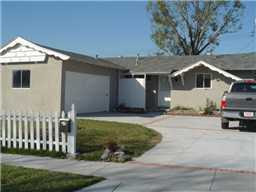
Single family home with attached garage, car in driveway
Here is a story about research done in a Philadelphia market where such purchasers approach poor and vulnerable homeowners in areas where owners may not want to approach a real estate agent for various reasons.

A report from a Drexel University Nowalk Metro Finance Lab states sellers are often short-changed when selling the people behind the "We Buy Houses" signs, visible throughout the Philadelphia area. This report found that owners selling to such investors without listing on the multiple listing service (MLS) typically receive less than half the value they would receive if using the traditional method of selling. In that market, a seller received $126,000 less than a similar home on the MLS, an estimated $500 million loss in the Philadelphia market over 4-1/2 years.  This study also states only two cities and four states regulate the wholesale market, which unlike real estate agents, does not require a license to work in.

The investor may approach an owner with a price in mind that accounts for his/her after-resale value minus their capital costs and then quotes a price to the homeowner. If the purchaser is not a contractor himself/herself who will do the work, then that investor may be looking for a connection who is looking to enter that market and sells the contract to them for a profit to the investor.

In Philadelphia these transactions are concentrated in certain areas where the majority of homes never go on the MLS.  The Finance Lab looked into the reasons why these owners would not list with an agent and skip getting a higher price - it had to do with factors involving racial discrimination, economic discrimination, and lack of knowledge and assistance on how to fix up a home for sale in today's HGTV-style market. So a lot of home equity ends of being lost to the owner, and eventually the sale leads to gradual gentrification of neighborhoods by new owners.

Not addressed in this article are the more recent Fair Housing and Fair Appraisal requirements which are now required in Realtor contracts, but which appear to be completely washed over in the Philadelphia areas because investors are typically unlicensed free agents, not regulated except where described above.

There are also licensed groups operating in a similar way in the wider real estate market in many states, including California, with the same aim - to buy low and sell high.  Sellers of these properties often feel they are being saved the hassle of preparation to sell, especially if they are near foreclosure, a short sale, or are low of funds to paint, repair and fix up to sell. But so often it's the same story - they don't realize how much money they're leaving on the table -- and in fact, there are now some loan programs which will analyze the equity and front the money to owners for just that purpose, who can they repay the short term loan out of escrow proceeds -- and still walk away with profit.

If you are wondering about a cost-to-sell, or a value for selling without prior repairs, this is the time to find out, as non-investor buyers are looking for a chance to own.

Please contact me, an experienced Realtor with 28 years experience, for a no-obligation market estimate for your house, condo or multi-unit residential property.


Julia Huntsman, REALTOR, Broker | http://www.juliahuntsman.com | 562-896-2609 | California Lic. #01188996

Web Statistics