3/13/2025

What If You're a California Listing Agent and You're Thinking About Representing the Buyer?

In California residential real estate, a dual agent—one who represents both the buyer and the seller—must navigate a minefield of fiduciary obligations and potential liabilities. Also, two agents working under same broker are also dual agents in a transaction. Below is a summary of the key liabilities and legal responsibilities:

Key Fiduciary Duties and Liabilities

1. Fiduciary Duty to Both Parties
A dual agent owes each party the duties of loyalty, confidentiality, honesty, and full disclosure. This means the agent must:

  • Disclose Material Facts: Inform both the buyer and seller of any information that could affect their decisions.
  • Avoid Conflicts of Interest: Balance competing interests without favoring one party over the other.
    Listing agent with buyer and seller
    Agent standing across from seller, buyer behind.
     
  • Obtain Informed Consent: Secure written consent from both parties acknowledging the dual agency relationship.

2. Strict Disclosure Requirements
Under California Civil Code §2079.13, dual agents are required to provide a clear, written disclosure of their dual role. Failure to disclose—or inadequate disclosure—can lead to:

  • Legal Claims: Breach of fiduciary duty, misrepresentation, or fraud.
  • Disciplinary Action: Potential sanctions by the California Department of Real Estate.

3. Liability for Associate Actions
If the dual agent’s salespersons or broker associates act negligently or breach their duties, the supervising agent (and by extension, the brokerage) may be held liable under the principle that the duty owed by an associate is equivalent to that owed by the principal broker.

4. Negotiation and Confidentiality Pitfalls
The dual agent must be careful during negotiations:

  • No Secret Profits: The agent must not use confidential information from one party to benefit the other.
  • Neutrality in Negotiations: The agent should present offers and counteroffers without bias, ensuring each party gets a fair deal.
  • A dual agent may not reveal to either party facts relating to the financial position, motivations, bargaining position or other personal information that may impact price, in addition to the restrictions already mentioned.

Dual agency in California residential transactions is legally permissible only when both parties are fully informed and provide written consent. A failure to adhere to strict disclosure and neutrality requirements can expose the dual agent to significant legal liabilities—including breach of fiduciary duty, misrepresentation, and potential disciplinary actions. By understanding and rigorously following these guidelines, a dual agent can mitigate risks and help ensure a fair transaction for both buyer and seller.


Julia Huntsman, REALTOR, Broker | http://www.abodes.realestate | 562-896-2609 | California Lic. #01188996

What If You're a California Buyer And You're Thinking about Using the Listing Agent?

In California residential real estate transactions, using a dual agent—where one agent represents both the buyer and the seller—comes with several risks for both parties. Also, when agents from the same brokerage are working with different parties to a single transaction, each agent is considered a dual agent, even if each individual agent communicates and works exclusively with a single party. A dual agent owes equal fiduciary duties to both parties to a transaction. Here’s what you need to know:

Agent With Buyer and Seller

Risks for Buyers and Sellers When Using a Dual Agent in California

1. Conflict of Interest

A dual agent has a fiduciary duty to both the buyer and seller, making it difficult to advocate fully for one party’s best interests. This can result in:

  • The seller not getting the highest possible price.
  • The buyer not securing the best deal.

2. Limited Advocacy and Negotiation

Since the agent must remain neutral, they cannot aggressively negotiate on behalf of either party. This may lead to:

  • Buyers overpaying for a property.
  • Sellers accepting lower offers than they might have with an independent agent.

3. Reduced Confidentiality

A dual agent has knowledge of both parties’ financial situations, motivations, and negotiation strategies. While legally required to maintain confidentiality, the risk remains that sensitive information may be inadvertently used to the disadvantage of either party.

4. Potential Legal Issues

California law allows dual agency, but it requires full disclosure and written consent from both the buyer and seller. Failure to do so can lead to legal disputes, lawsuits, or even the cancellation of the transaction.

5. Ethical Concerns and Perceived Bias

Some buyers and sellers feel that a dual agent cannot be truly impartial, potentially leading to distrust in the process. This can complicate the transaction and create unnecessary tension.

How to Protect Yourself in a Dual Agency Transaction

  • Understand your rights: California law requires disclosure of dual agency relationships—make sure you’re fully informed.
  • Request transparency: Ask your agent how they plan to handle negotiations fairly.
  • Consider hiring a real estate attorney: Legal guidance can help protect your interests.
  • Explore alternative representation: If you’re uncomfortable with dual agency, you can choose separate agents for better advocacy. When one agent  represents only the buyer, the buyer is then not using the listing agent who already represented the seller.

In California, dual agency—where a real estate agent represents both the buyer and the seller in a transaction—is legal but subject to stringent regulations to protect all parties involved. Here's an overview of the legal framework governing dual agency in the state:​

Legal Framework for Dual Agency in California

1. Definition and Legality

Under California law, dual agency occurs when a real estate agent or brokerage represents both the buyer and the seller in the same transaction. This arrangement is permissible provided that specific legal requirements are met. 

2. Fiduciary Duties

Real estate agents owe fiduciary duties to their clients, including loyalty, confidentiality, and full disclosure. In a dual agency scenario, fulfilling these duties becomes complex, as the agent must balance the interests of both parties without favoring one over the other. 

3. Disclosure Requirements

California Civil Code mandates that agents provide a written disclosure to both the buyer and the seller when entering into a dual agency relationship. This disclosure must outline the potential conflicts of interest and the implications of such an arrangement. Both parties must give their informed written consent for the dual agency to proceed. 

4. Limitations on Information Sharing

A dual agent is prohibited from sharing certain confidential information between the parties without express consent. For example, the agent cannot disclose to the buyer that the seller is willing to accept a lower price, nor can they reveal to the seller that the buyer is willing to pay more. This ensures that both parties' bargaining positions are protected. 

5. Legal Consequences of Non-Compliance

Failure to properly disclose a dual agency relationship can lead to significant legal consequences, including the forfeiture of the agent's commission, rescission of the transaction, and potential disciplinary action by the California Department of Real Estate.

6. Recent Trends and Considerations

Recent trends indicate a rise in dual agency arrangements in California, particularly in markets like Los Angeles. While this can offer benefits such as streamlined communication, it also raises concerns about impartiality and the potential for conflicts of interest. Both buyers and sellers are advised to carefully consider these factors and ensure they are fully informed before consenting to a dual agency arrangement. ​

Understanding these legal aspects is crucial for anyone involved in California real estate transactions.


Julia Huntsman, REALTOR, Broker | http://www.abodes.realestate | 562-896-2609 | California Lic. #01188996

3/05/2025

What Are Current Rebuilding Requirements in California?

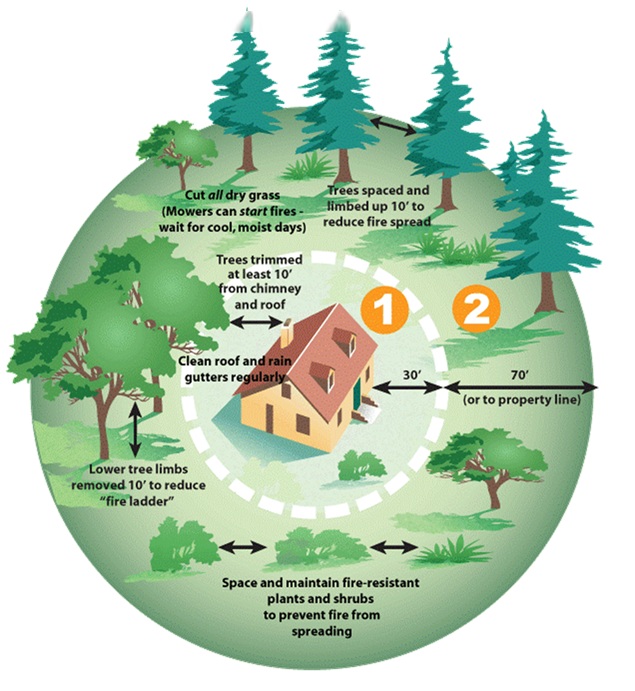
Defensible Space Around Property
If you sell your California residential property or buy a new one, the seller and buyer will be responsible for disclosing and reviewing the current information about fire zones and the proximity of that property to fire zones per State Fire Marshal mapping. In Los Angeles County, Very High Fire Hazard Severity Zone (VHSFZ)requires fireproofing based on current standards for rebuilds. Actually, every homeowner no matter their location, should review these standards for home protection:

  • Class A Roofing - Includes clay tile, asphalt shingle, concrete tile,  steel, slate tile. No wood shake.  Use concrete stop in clay tiles to prevent intruding embers.
  • Use roof and ridge vents. Any vents should have screens (1/8") to prevent ember intrusion. 
  • Roof gutters must have screens, spark arrestors in chimneys when burning solid fuel.
  • Exterior walls: 1-hour rated made of stucco, brick, fiber cement siding--wood siding doesn't comply.
  • Doors: Fire retardant wood or non-combustible for garage doors; other exterior doors to have 20-minute rating-metal, glass and solid hardwood, layer of tempered glass over glazing.
  • Windows: One pane of double paned windows to be tempered.
  • Decks, stairs, risers to be non-combustible materials, fiber cement, concrete/stone patio walkways.
  • Defensible space: No vines or climbing plants, leave a clear 5 feet perimeter around house, remove dead vegetation 100 feet from structure, hedges no higher than 8 feet. Plant removal:  no Juniper, Italian Cypress, Bougainvillea, Wisteria, Eucalyptus, Pampas grass, and others. Remove fuel ladders by separate higher and lower plantings with at least a 2 foot space.
  •  
  • A final word on Smoke Cleanup: 
  • Replace air filters, get ducts cleaned, and check for any exterior equipment damage.
  • Use portable air cleaner with HEPA filter for as long as possible.
  • Replace insulation in vented spaces. Smokey smell will return in hot months.
  • Debris cleanup: use water, not a blower. Review local agency restrictions.
  • Water:  remove all filters and clean/check all equipment.
  • Under sink systems:  Drain multiple times, change filter.
  • Whole house systems should be checked by a maintenance company.

See prior post.

This list is not all-inclusive of all activities a homeowner may have to take, please consult your local area County or City requirements.

*Information and illustration from Joseph Spierer Architects.

Julia Huntsman, REALTOR, Broker | http://www.abodes.realestate | 562-896-2609 | California Lic. #01188996

About Rebuilding After the California Fires

Aerial photo of some rebuilds
Over the years, fires have affected large areas in Southern California and Northern California, causing many people to decide what they will do next. Some will rebuild, others will sell their lots and relocate to another area. 

As an example, the Malibu Woolsey fire in November of 2018 burned down approximately 500 houses: the rebuild stats as of January, 2025 show that so far 363 single family homes were approved by the planning authority, 296 houses have obtained permits, and out of the 500 or so homes, seven years post-fire, a total of 182 homes have actually been rebuilt.   


Aerial photo after fire
In the current burn areas of Pacific Palisades and Altadena/Pasadena, many people have already taken the initial steps of filing insurance claim, contacting their mortgage professional, dealing with tax assessor to reassess at lower value and/or postpone property tax bill, are going through lot cleanup, developing erosion control of the lot, and considering temporary housing on the lot. Owners should also find out if they are in a Coastal Zone or other plan overlay which affects their rebuild.  If your rebuilt stays within 110% of approved size, the property is exempt from CEQA (California Environmental Quality Act) and CCC (California Coastal Commission).  Other protection are in place for price gouging, property tax payments, unsolicited offers for amounts less than market value.   City of Los Angeles has approved numerous time deadlines and certain exemptions, such as 7 years to obtain permits and construction completion within following 3 years after permits issued. 

A. Budgeting for rebuild: In the Palisades, an average rebuild sq.ft. price estimate is within $600-$800, with "soft" costs addressing structural engineer, civil engineer, soil, Title 24--California's Building Energy Efficiency Standards--and landscaping. 

The timelines involved for surveys, permits, engineer, building and safety reviews, rebuild plans, rebuild design (you may or may not hire an architect) can take up to 2 years. 

B. In Altadena, the EPA started removal at the end of January, and continued by the U.S. Army Corps of Engineers at no cost to the owner. Private cleanups by owners may cost up to $127,000. A majority of the debris removal should be done by June 30 2025.

Important Questions: What are building regulation requirements for new builds? Various regulations put in place starting in 1963 resulted in more stringent rules for fireproofing. 

See next post for more information on current building requirements. *

*Information and photos in this post from Joseph Spierer Architects presentation 1-27-2025.


Julia Huntsman, REALTOR, Broker | http://www.abodes.realestate | 562-896-2609 | California Lic. #01188996

Web Statistics