10/07/2015

Points to Ponder When Considering A California Condo or Homeowner Association

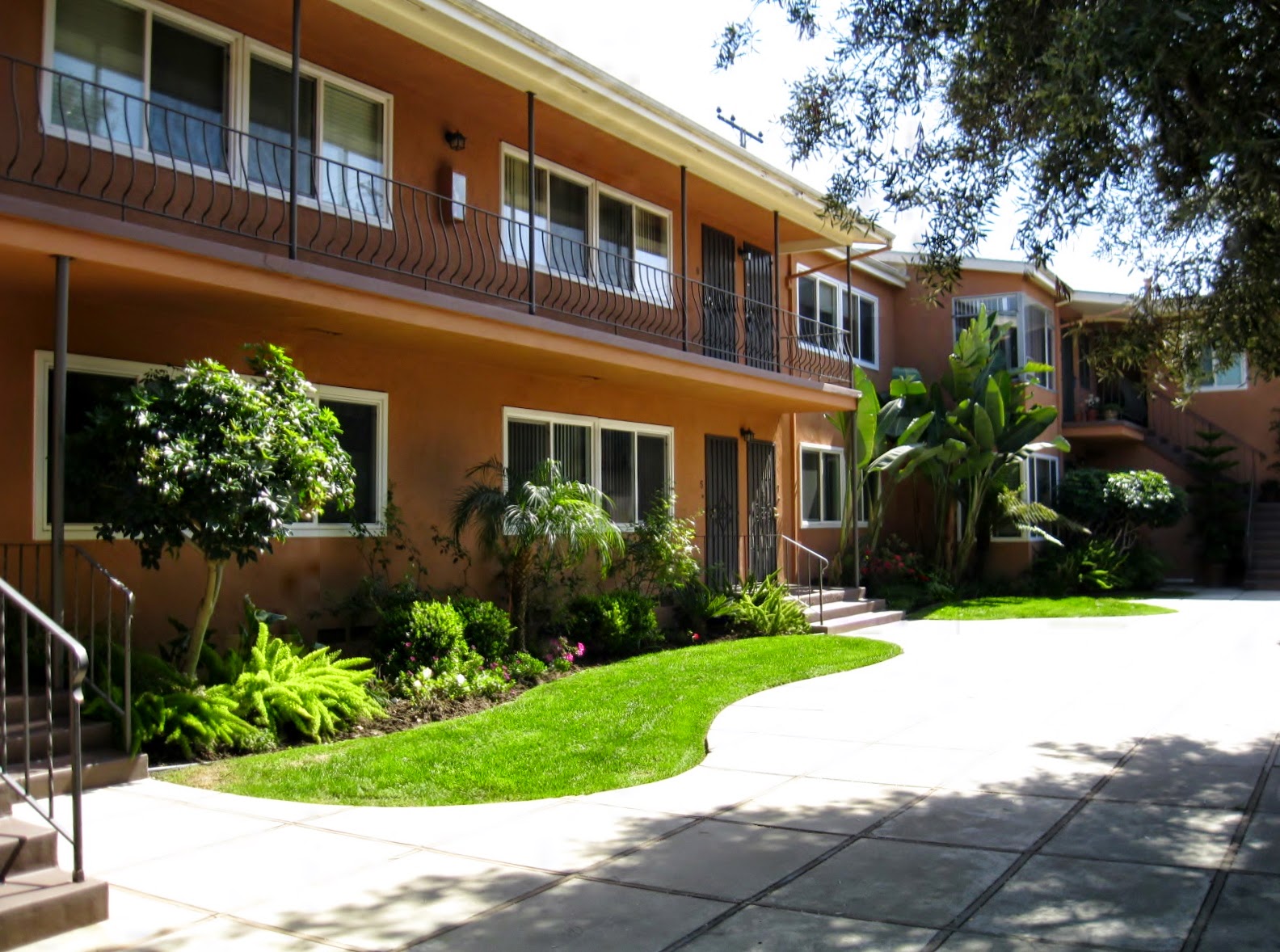
Versailles HOA Condominiums
Single Family in Bixby Village HOA
Condominiums and other types of units in common interest developments (CID) are very appealing because they may offer homeownership in an area where houses cost much more, security, amenities, neighbor accountability, and less personal responsibility for certain maintenance issues that might otherwise be required in a non-CID single family home.

The most common form of ownership in Southern California is ownership in a condominium project where the owner has title to an individual unit and an undivided interest in the common area. Other forms are stock co-op, own-your-owns, and planned unit developments (PUDs).

The common areas are the areas outside the unit such as walkways and lobbies.  They also include, if present, exclusive use areas such as parking spaces, balconies, and private patios, which many people think they bought when they bought their condo, but in almost all circumstances what they acquired was the right to exclusively use them.

A standard part of the purchase contract includes the receipt and review of association documents which the seller is required to provide.  So often, though, these documents, which include the CCRs, the Rules and Regulations, and By-Laws, are not so thoroughly looked at during the buyer's contingency period, because there seems to be so much else to do, like go to your job everyday.  So the more you know beforehand, the better off you'll be.  Some of the more common concerns that pop up are pets, parking, smoking, and the hours on the association swimming pool or tennis court.  HOAs may regulate the number and type of pets within the guidelines of the pet law; smoking is becoming more of an issue even within private units because smoke drifts out windows; and be prepared to carefully check out the assigned parking area because you'll be signing a disclosure form from the seller so that your oversize truck does not become an issue when you move in.  Why is it so important to know your documents? Because they are voted in by the association members, and they form a contract between the owners and the Board of Directors whose duty it is to enforce them.

If you are buying into a small association, you want to verify that they have an active association as required by law--nothing could be worse than paying dues and not knowing where the money is going.  How old are their CCRs?  Yes, it's still not unusual to find 30-unit associations operating on original documents from the 1970s.  Just be aware that many California laws have changed since then and that older documents will not reflect those laws.  Associations are required to make a growing number of annual disclosures to their members, i.e., starting 1/1/2016, they must disclose in their annual budget if the project is FHA/VA qualified (FYI:  a growing number of formerly FHA-approved associations are not meeting current FHA requirements).

An important law effective January 1, 2015 requires the seller to pay upfront for all HOA documents (per Civil Code Sec. 4525) provided to the buyer.  This can amount to several hundred dollars depending on property management companies who typically manage the transmission for the seller; so the seller may instead forward complete copies directly with written verification (form provided by your Realtor) if he/she already possesses them.  You the seller will have to order what you do not have, but your costs should be greatly reduced.  The contract specifically details these and other HOA documents, and what the buyer or seller will pay for, because non-required documents may be paid for by the buyer.  A new owner could expect to find topics addressing solar panels, satellite dishes, roofing materials, sign and/or flag displays, right of board entry (or not), tenant use of common area, storage, parking, noise, use of swimming pools, architectural control, smoking, and much more including the owner's duty to pay dues and other assessments, what the board may impose a lien on and how, and how the board is elected.

 If you would like a more detailed written discussion about the rights and responsibility of homeownership in various types of common interest developments, please contact me with your information and I will forward you the information.

9/24/2015

REDUCED. Extensively Remodeled 1923 Cape Cod Style Home in Belmont Heights ...

Belmont Heights CraftsmanNow priced at $999,789. October 28 2015.
Remodeled, but with its original character. This is the home for you, just 12 lots from 2nd Street in Belmont Shore, shops and fun. This 1923 Cape Cod is in prime Belmont Heights on a northwest corner lot which offers morning, afternoon and evening light/sun. This home has all the character and charm that anyone could ever want, and can easily be used as a 4 bedroom 2.5 bath home.

The 3rd floor works beautifully as a large master with 3/4 bath, or guest suite, with expansive ocean/water views. As you enter the living room you will see the original hard wood floors with dark wood inlays, a Batchelder tile fireplace, and custom crown molding and plantation shutters covering the double paned windows. The large formal dining room has original inlays as well as original corner builtins. The kitchen also has a cozy fireplace,  granite counters and tons of storage. The 2nd floor offers 3 bedrooms, including an office with builtins, plus a large bath. The large master on the 2nd floor has dual closets and a features a sitting area. This home offers central heat updated electrical, copper plumbing, central heat. Also featured is a subterranean 15x140 garage so no land is wasted on driveway and garage.
Asking $1,099,999.  Click on link for more photos and floor plan.
http://www.planomatic.com/mls41382

For more information on availability of this property, please contact me soon! 562-896-260, Lic. #01188996

Note:  This listing is off market.


9/11/2015

Are You Taking All Your Tax Deductions?

It's never too early to review what the tax advantages are for you as a homeowner or a future homeowner.

Homeownership comes with many benefits, including some sizeable tax deductions.


For more specific information, ask your accountant or tax professional about whether these deductions apply to you. Also, more information is available in the many publication published on the IRS and California FTB web sites.

Deductions
  • Mortgage interest – You may be able to deduct all interest paid on your mortgage.
  • Mortgage insurance – Mortgage insurance on government-backed mortgages may be deductible in the same way as mortgage interest.
  • Local property tax – You may deduct property taxes paid to the county tax collector.
  • Points & prepaid interest – Points and charges paid to obtain a mortgage for a home purchase or improvements may be deductible.
  • Home office deduction – The portion of your home used exclusively and regularly as an office space is deductible from your taxable income.
  • Green energy tax credit – Installation of renewable energy systems may be eligible for deductions up to 30%.
  • Moving expenses – If you moved more than 50 miles for a job opportunity, you may be eligible for moving deductions.
  • Renovation/demolition salvage – If you donated construction materials or demolition waste to a qualified charity, you may deduct the value of the donated materials.
  • Improvements added to basis – Qualifying improvements added to your cost basis may reduce your capital gains tax owed if you later sell your home.
  • Withholding credit for investors – If you purchased or sold an income property and 3.33% was withheld, check out the Franchise Tax Board’s withholding criteria to ensure you receive credits.
Looking to buy or sell your home? Call me today or go to my website at www.juliahuntsman.com.

9/03/2015

Some Types of Taxes When Selling Real Estate, and a 1031 Exchange May Save Money

There are certain differences between owner-occupied property and investor property (non-owner occupied) when it comes to selling--and buying, but here we are concerned more with selling.

Some owners who have rented out their residences and moved on to another location are surprised to find out when it comes time to sell that they may have lost their capital gains exclusion ($250,000, or $500,000 for married owners). On top of that, they may be paying the State of California 3-1/3% withholding tax upfront at the close of escrow.  Additionally, if you took depreciation on an income property you now own as an investor, you will have additional reckoning at tax time.  Please see IRS Publication 523 for specific information.

Depreciation is a method for matching the costs of acquiring property over the properties’ estimated
economic life.  The IRS requires that most properties be depreciated via the ‘straight-line’ depreciation method.  Using the straight-line method, residential income properties are depreciated over 27.5 years.  Commercial properties are depreciated over 39 years.

Depreciation Calculations
Land is not depreciable.  In order to properly calculate depreciation, the value of land must be excluded. For example, a $1MM duplex with land worth $300,000 has $700,000 worth of depreciable real estate.  Using the straight-line depreciation method, the annual depreciation amount is approximately $25,500 ($700,000/27.5)  NOTE: The IRS will typically not challenge the assessment of the land value if it is reasonable. A tax advisor, attorney or real estate agent should be able to provide guidance for what is reasonable based on the location and type of land.

Depreciation Benefits
Depreciation is an ‘intangible expense’ that will reduce the reportable taxable income from the property, and means less tax to the IRS.
Here’s how it works:
The yearly rental income from the example duplex is $36,000. At the end of the year, this will have to
be reported to the IRS. However, the IRS does not tax the entire $36,000. The taxable income from the property is calculated as follows:
  • Rental Income
  • (Expenses)
  • (Depreciation)
  • Taxable Rental Income
If the expenses of operating and managing the duplex are $5,000 for the year, the taxable rental
income is calculated as follows:
  • Rental Income $36,000
  • (Expenses) ($5,000)
  • (Depreciation) ($25,500)
  • Taxable Rental Income $5,500
NOTE: Please always seek the guidance of a tax advisor. Capital gains may or may not apply depending on how long you lived in the property, and depreciation items may be calculated on different schedules. To completely avoid last minute upsets and lose your deal, it's important to obtain your information before you sell--I once represented a buyer on a very nice fourplex where the seller finally obtained tax guidance after we opened escrow, only to be shocked by how much recapture tax had to be paid to the IRS since the property had been owned long enough to be fully depreciated.  The seller cancelled escrow, much to the buyer's disappointment.

Depreciation Tax
Upon the sale of an investment property, the IRS requires the payment of a depreciation re
tax, which means you have to "pay back" the money you were entitled to take previously. The tax rate is currently set at 25%. In the example above, if the duplex was owned for 10 years, the entire depreciation taken on the property would amount to $255,000 ($25,500 x 10).  The IRS requires a recapture tax on that entire amount. Hence, the sale of the duplex will result in a $63,750 depreciation recapture tax (255,000 x 25%). This is in addition to state and federal capital gains taxes. The depreciation recapture tax as well as any associated capital gains taxes can be deferred in full via a 1031 Exchange.

Conclusion
Of all the benefits of owning real estate, depreciation may be one of the most important. The tax advantage depreciation offers is powerful. The IRS will always assume that depreciation is taken and
will hold an investor liable for the deprecation recapture tax – even if the investor failed to take advantage of the depreciation. Bottom line: make sure you are taking advantage of this powerful tool.
Thanks to Asset Exchange Company for this sample.

9/02/2015

Prices in Long Beach, Lakewood, Cerritos, Signal Hill

Home prices continue to rise in Los Angeles and Orange Counties, 6% to June of this year from June of last year according to the Los Angeles Times.  In the four cities below, the average days on market for a single family home in August ranges from 41 days (Lakewood) to 67 days (Signal Hill). Long Beach had total closings of 193 (not surprising since it's the largest city of the four), Signal Hill had 6 closed sales, Cerritos had 26 sales, and Lakewood had 72 sales.

Even though the National Association of Realtors® reported that sales in July were the highest since 2007, Long Beach and Cerritos sales volume decreased somewhat in August.

Housing inventory is still low, although a recent daily trend for the local market shows a higher number of new listings in the MLS than closed sales. For August, however, each of the four cities below shows a decrease in inventory supply from the prior month: 1.6 months (Lakewood) being the lowest, and 3.7 months (Signal Hill) being the highest. Long Beach had 2.2 months supply in August. The traditional norm for a normal market supply has been 6 months.  This is a long term trend: Prices go up while inventory remains low.

Condo prices, which are typically lower than single family home prices, also increased from the prior month: average prices in Lakewood -- $485,000; Signal Hill -- $379,000; Long Beach -- $362,000; Cerritos -- $392,000; all prices represent increases from prior month range from 2% (Signal Hill) to 60% (Lakewood).

8/10/2015

Don't Overprice Your Home's Asking Price

When a willing buyer and a willing seller complete a home sale, they have just announced to the world what the value of that property is.  That home may now be used as a marker for other similar home sales, based on other factors:

Location - proximity to community attributes such as parks, schools, and job market usually has more desirability to the buyer.
Size - Larger homes and larger lots may sell for more, and comparing a home to one that is much larger or much smaller could lead to the wrong pricing.  A buyer's lender may have very specific criteria on size when it comes time for the appraisal.
Bedrooms and bathrooms - The most common request from buyers today is for a three-bedroom, two-bath home; families today want and expect more privacy than in prior eras. And, the difference between a two-bedroom vs. a three-bedroom home may be critical for the buyer.
Features - Luxury sells, and homes with newer flooring, newer counters and cabinets are perceived as more luxurious and appealing. Some features such as spas and pools may not be worth extra to the buyer, these are often market-led factors. Newer landscaping may be a comparison item depending on the area.
Condition - A newer home that is well-maintained retains more of its original value, as do updated older homes. Homes with deferred maintenance sell for less.
Appeal - A home that looks inviting on both the exterior and the interior may be able to compensate somewhat for a less desirable location, or some other condition the seller has no control over.

If your house looks like this . . .
Too often sellers based an asking price on their own perceived value, or because they are comparing their property to a recent sale that is not completely comparable to theirs. Understanding how the buyer views the property, using the proper sale comparables most likely to be used by an appraiser, and seeing how their property stacks up against the immediate competition in the local market are important tools for seller objectivity.

It cannot be compared to this.
The public online valuation systems may be very accessible and offer quick valuations, but the homeowner should keep in mind that these systems do not use software that can "see" the home the way the buyer or your REALTOR does.  They use the public tax records, and may include properties inappropriate for yours.  As an example, 9 recently sold SFRs or condo properties in the Long Beach 90803 zip code between February 25th and August 4th, 2015 varied as much as 68% between the actual sales price and the online value estimate by a popular website company.  (Many real estate data sources within the industry do use AVMs, but some are "closer" to value than others.)  In this particular instance with the 9 properties, 6 of the properties were overestimated in value, and 3 were underestimated.  Two of the underestimated were within 1.8% of the actual selling price, which is a realistic market difference, while the third underestimated value was 17% less, which is far outside of the average  list-to-sell price.  The condo that was overestimated in value by 68% at $572,000 actually sold at $339,000.  Other estimates ranged between 7% to 41% over selling price. 

Speaking of estimates, the value of an experienced real estate professional cannot be underestimated. A good market opinion and strategy can earn you more money at the close, and save unnecessary time on the market.  Please contact me, a professional with 20 years' of experience! 


7/17/2015

Are Your Ceiling Fans Turning in the Right Direction?

Are you wondering what difference it makes to have your ceiling fans be in one direction or the other?  Make sure your ceiling fans are spinning in the right direction to move air around the room.

Most fans are reversible: One direction pushes air down, creating a nice summer breeze; the other direction sucks air up, helping you distribute heat in winter. There’s normally a switch on the motor to change the fan’s direction.

Is your fan turning in the right direction for summer?
  • Stand beneath the running fan, and if you feel a cooling breeze, it’s turning correctly.
  • If not, change directions, usually by flicking a switch on the fan’s base.

Typically, it’s counterclockwise or left for summer and clockwise for winter, but the best method is to follow the steps above.

This applies to fans in general, depending on which way you want the air to flow., i.e., into a garage or out of a garage.

More information is at EnergyStar.gov

In the summer, use the ceiling fan in the counterclockwise direction. While standing directly under the ceiling fan you should feel a cool breeze. The airflow produced creates a wind-chill effect, making you "feel" cooler. In the winter, reverse the motor and operate the ceiling fan at low speed in the clockwise direction. This produces a gentle updraft, which forces warm air near the ceiling down into the occupied space. Remember to adjust your thermostat when using your ceiling fan — additional energy and dollar savings could be realized with this simple step!

7/13/2015

Long Beach Area Hot Sheet Data Shows Trends Towards More Listings

Every day the MLS shows how many new listings, new escrows, or new sales in a given period of time.  Even though the market is still in a low inventory mode, there has been a trend lately of more new listings coming on the market vs. how many sold in a given period of time, i.e., 24 hours up to 7 days.  So for Long Beach, Lakewood, Signal Hill areas, there seems to be a "catch up" going on.  And even though you can read every day of the week in the Los Angeles Times about the latest multi-million dollar celebrity residence sale, recent sales in this area don't share that profile.  Between July 10th and July 13th, 27 houses or condos sold in these 3 areas, ranging from $235,000 (house)  to $1,070,000 (condo). These are represented by vastly different neighborhoods, and seeming show the far ends of the distribution curve for houses and condos. 
MLS Area Sold Stats for 7/10-7/13-2015

As showing at the right, the average price for these properties in this time period is $505,963.
While condos and houses are not normally used to compare with each other, this data is for trend purposes,.


New listings on the market for the same time and areas are 46, ranging from $175,000, to $3,450,000.   Three properties went into escrow right away, and 43 remain as active listings, with the average listing price being $628,072.  Whether this shows an upward trend in sales price remains to be seen, as the $3,450,000 property has been previously listed multiple times and not yet sold.
MLS Area New Listing/Active Stats for 7/10-7/13-2015


For buyers, this is a positive trend; for sellers, it's really nothing to get the least big panicked over, because over stats for June for Long Beach, for example, clearly show that there is less than 3 months of inventory for houses and condos.  This low level, which has been going on for very long periods of time, does not reflect a normal level of inventory, which traditionally means about 6 months, or perhaps double our current inventory.  Sellers often think that multiple bids due to housing shortage is favorable for them, which can be quite true, but not if you don't already have a home to move into after you sell.

If you are thinking of buying or selling, whether you have a house, condo or multiple units, give me a call for an evaluation of your selling position.
Lic# 01188996

7/06/2015

What Do Homesellers Really Want? Four Important Things


 Judge Judy, that icon of courtroom wisdom, says "Beauty fades, dumb is forever."

"The top four tasks that sellers want from their agent has remained consistent regardless of the housing market— sellers place the highest priority on: helping the seller market the home to potential buyers, help selling the home within a specific timeframe, help pricing the home competitively, and help finding a buyer for the home.  As many sellers use an agent that was recommended to them personally, it is not surprising that the reputation of the agent is the most important factor in choosing an agent to work with (36 percent). This is followed by the importance of the agent’s honesty and trustworthiness at 19 percent and the knowledge of the neighborhood at 15 percent."  Just a few more facts out of this 128 page report:  The typical age of the homeseller was 54, vs. 46 years in the 2009 report.  Married couples were 74% of the sellers, while single females accounted for 14% of sellers.

This report stems from an annual survey, the most recent being the  July 2014 127-question survey which was sent out by the National Association of REALTORS® with a response from 6,572 home buyers who had purchased a home during the prior year within one of the four U.S. regions.  There are many elements to this report - including agent efforts, problems buyers can have with financing, characteristics of homes sold and homes purchased, all of which is valuable profile information.


Ironically, buyers in this survey rated the top two valuable features of a real estate website as being 1) the photos of a property, and 2) detailed information about properties for sale.  Maps, tours and neighborhood information came next in importance, with videos of the property second to least most important.  I say ironically, because--and here is the unspoken elephant in the room not usually overtly addressed in these nice surveys--one of the most difficult aspects of selling for many sellers to grasp is the appearance and cosmetic condition of their home, yet most sellers always want their home marketed as much as possible.  A key factor in marketing a home is how it looks to the buyer, that means the buyer who is looking at those photographs.  The cereal box needs to get off the counter, the bed sheets need to hang evenly, because those photos are memorializing your home FOREVER on the internet.  And once the buyer gets inside the house, if only they could see past the catfood, and ignore how it smells on a 90 degree day, it would all be so much easier.  This is where the faded beauty and forever dumb enter the listing.  You would not buy a car like that off the showroom floor, not for full price.  And that's where your listing is, on the showroom floor.  But I digress.  Buyers are not always perfect either, but they do have a physical inspector and a 17-day contingency period, and a 21-day loan approval contingency period.

So to have it all come up roses, it pays to pay attention--on appearance, on disclosures, on price--so that the homeseller can get what he/she really wants -- a SOLD home. If you, however, are a seller who is marching to the right drumbeat on marketing your home, my sincere congratulations!

To find out competitive listings in your area, just go to www.juliahuntsman.com.
Lic# 01188996


7/02/2015

You Don't Have to Have a New Home to Have a SmartHome


The best part of home innovation is that it has little to do with the infrastructure in your house. So, even older homes can take advantage of the home innovation products on the market today. From wireless dimmers, to a home battery, chatting with your appliances to a speaker light bulb, new products do not require remodels of your home, but things that can be used now!

Here’s a look at the products featured and discussed by members of the Coldwell Banker Home Innovation Panel from April 2015:
1. Caséta Wireless Dimmers by Lutron. Control your lights, shades and temperature from anywhere, whether you’re home or away. Caséta Wireless dimmers and switches install in minutes, work with numerous bulb types – including dimmable LEDs and CFLs, and bring the convenience of a connected home to your fingertips. “Smart lighting may be special now, but it’s going to be part of a smart home going forward,” says Matt Swatsky,of Lutron Electronics product management director.
2. Tesla. We’re all enamored with Tesla Motors. Who doesn’t want a car that drives like a dream, runs on electricity and gets new features every time the system is updated? Now, the company is offering the TeslaPowerwall. It’s a home battery that charges using electricity generated from solar panels, or when utility rates are low, and powers your home in the evening. It also fortifies your home against power outages by providing a backup electricity supply. Automated,compact and simple to install, Powerwall offers independence from the utility grid and the security of an emergency backup.
3. LG HomeChat. Start chatting with your home appliances on your mobile messenger. Heading to the store but not sure if you need milk or not, text your refrigerator and it will tell you. What is your refrigerator doing right now? Is your washer not working properly? Isn’t it a hassle to have to find your audio and play music every time you come home? HomeChat will take care of everything. “HomeChat is a digital personal assistant that you can text and tell the refrigerator to make more ice or download new wash cycles on your LG washing machine,” says John Taylor, vice president
of public affairs and communications for LG.
4. Sengled PULSE speaker bulb. Each intelligent bulb has a JBL multi-channel stereo wireless speaker hidden within. You can simply screw the bulb into your existing lamp socket and pair with your Sengled PulseMaster bulb; download and install the app on your smart devices. Instantly stream music and regulate the lighting. They also have lights that offer wireless security cameras, so cool! Because you don’t need to buy or adapt infrastructure, said Robin Foreman, vice president of marketing and business development, “You can make an impact on day one with just one bulb.
5. Nest. “We transform unloved home products,” said Ben Bixby of NEST. The company offers a thermostat that can program itself. Most people leave the house at one temperature and forget to change it. So, the Nest Learning Thermostat learns your schedule, programs itself and can be controlled from your phone. Teach it well and the Nest Thermostat can lower your heating
and cooling bills up to 20 percent.

7/01/2015

Long Beach 4th of July

Looking for July 4th activities in Long Beach?  Here are all-day
events in Long Beach: on the Queen Mary, a bike parade, barbecue at the Aquarium, and a party at the Belmont Pier. 

All-American 4th of July
Queen Mary / 12-11pm
(562) 499-1771 / www.queenmary.com


Kids’ July 4th Bike Parade
Granada Avenue / 9:15am
http://justinrudd.com/bikeparade.html


Big Bang on the Bay - July 3
Boathouse / 5:30-10pm
(562) 493-1100 / www.boathouseonthebay.com


Late Night & BBQ
Aquarium of the Pacific / 5-10pm
(562) 590-3100 / www.aquariumofpacific.org


Party on the Pier - July 4-5
Belmont Veterans Memorial Pier / 12-10pm
(562) 477-6820 / www.alfredosbeachclub.com


Please remember that fireworks are not allowed in the City of Long Beach, except as permitted for events. 

6/04/2015

May 2015: Average Price of a Single Family Home in Long Beach CA: $590,000

The average price of a single family home in Long Beach at the end of May was $590,000, an increase from $427,000 in January of 2013. The overall market in California is characterized by fewer first-time homebuyers, lower homeowner turnover, static turnover in rentals. Employment levels are not expected to rise to pre-recession levels until 2019, even though California has regained all the jobs lost due to the 2008 recession. High level of speculation by investor buyers drove prices upward beyond the borrowing capacity of occupant buyers. California homeowners underwater in their home values is around the 9-10% level, and is another chunk of the population which is holding back movement in the market due to inability to move on.
Relocating baby boomers are anticipated to be a forward movement in selling and then buying -- however, that will vary greatly by geographic location in the state. According to an estate sale professional who works in the Long Beach area and is kept very busy with approximately three estate sales per week, it would seem many people in this area are not moving until the very end.
 Buy-and-hold owners may finally begin to let loose of their accumulated rental inventory (this has been a major impact in areas such as Riverside County), which hopefully will occur prior to a major rise in interest rates. (Interest rates bipped up twice yesterday.) This investor-held group is considered to be a massive shadow inventory which may not be released for another two-plus years, and at what price? For now, there is a gradual 3% annual increase in the number of new jobs, and a price-flattening trend compared to 2013 and 2014, all of which is helpful to bringing an upward trend in sales volume and inventory over time.

Who May Run and Check Your Credit in California?

Homebuyers seeking a purchase or refinance mortgage, or people wanting to buy appliances on payment plans or using their credit cards, are among those who will have their credit reports checked.  The federal Fair Credit Reporting Act requirements state who can look at or order your credit report.

Such people may include landlords, credit card issuers, car loan lenders, student loan lenders and insurance companies and government agencies.   However, at least ten states (California, Colorado, Connecticut, Hawaii, Illinois, Maryland, Nevada, Oregon, Vermont, and Washington) have passed laws prohibiting employers from pulling credit reports at all or restricting how and when employers may use them to make hiring or other job decisions.  According to the Fair Credit Reporting Act, access is restricted to businesses or government agencies that meet the permissible purpose requirements.

Concerning landlords:  If a landlord has a property managed or listed by a Realtor with a written contract in place giving the broker permission, the broker may be allowed to run the credit of a prospective tenant.  Or, the Realtor can also assist the property owner by helping the landlord find a source for running credit (about $25), with action performed and the report reviewed by the landlord.   The Realtor may be doing all other agreed functions for renting, but the credit report responsibility lies with the landlord if not otherwise expressly allowed for in the contract.  It would be a good idea for landlords and tenants alike to find out what should be of concern to a landlord.  Landlords can check rental history, accounts, debts, foreclosures and general credit worthiness.  For individuals who experienced getting a notice of default and foreclosure, even though they had other good credit, they found it was not easy moving to a good rental property, and some found that getting a co-signer was necessary.

To find out what can be included in your credit report and other resource material, Privacy Rights Clearinghouse and Nolo contain additional information.  For California information on accessing a free annual credit report, see the California Office of the Attorney General.


5/22/2015

Rental Scams: Don't Fall For Them

One of the downsides of all the home listings on the internet is the abuse of them by hijackers.  They
go to sites such as Zillow and Trulia, choose a property and turn a legitimate listing into a so-called rental ad, with the listing agent not finding out until he/she receives a bunch of phone calls about a "rental".  In a very expensive and limited rental market, a renter is doubly frustrated when finding out that the seemingly good deal is too good to be true.  So not only is it a waste of time for those searching for a rental property, it's also an extreme annoyance to the listing agent whose listing is illegally used as a dupe and all the misdirected phone calls, as well as the time it takes to correct the situation on the listing site. 

The smarter people knew before they called me that $1200 per month rent for a 2800 sq. ft two-story house in a nice neighborhood of $500,000-$600,000 selling prices was suspicious, but they called me anyway after they drove by the property.  Some actually called the name given on the fake rental ad, which of course used my listing photos and information as if it were their own, and were told to send money before they would be given any more information.  This is the tipoff--a legitimate landlord or management company does not request money, i.e., security deposit or rent, up front for information. 

And another scenario may be that the rental does not exist at all.  Yet another is a rental sign in front of an actual advertised property that is for rent, or it may be a bank-owned property for sale.  In this situation the false advertiser is attempting to get business by re-directing prospective renters to actual rentals--one company has been complained about in California, yet they popped up again with their red and white rental signs on wooden stakes posted on properties that are not their rentals. 

For more information, contact the Federal Trade Commission.  Avoid sending money to people you don't know.

5/20/2015

Have You Heard of PACE for Energy/Water Savings?

Keeping Cool
The Property Assessed Clean Energy Program, or PACE, makes it possible for an owner to finance certain improvements and pay for them via an assessment on the owner's property.
There are a wide range of conservation improvements allowed and which vary by program, but most PACE programs include  improvements such as solar panels, energy star rated core plumbing systems, duct replacement, electric vehicle plug-in stations, pool circulating pumps, water heaters, and furnace.  They work in conjunction with a local public agency, and are available for both residential and commercial properties.

To be eligible, the homeowner must be current on property taxes, with no judgment liens or federal or state tax liens, not in bankruptcy, can't be delinquent on any mortgages or late on property taxes (some exceptions), and there are limits based on the mortgage percentage value of the property.


Property tax liens associated with the homes underlying the security, which are meant to fund energy-savings measures, are senior to all other liens - including mortgages on the properties financed by Fannie Mae and Freddie Mac (which currently finance close to 90% of US mortgages).  Read more at Reuters.  Since they don't like not being in first lien position, the Federal Housing Finance Agency (FHFA) ordered Fannie and Freddie to avoid financing mortgages on homes with PACE liens already on them,  Generally, all loans following FHFA guidelines must obtain consent before being allowed to enter into a PACE program, or the lender may declare the loan in default if owner does not pay off the lien. These conditions also affect refinancing as well, especially if the loan was obtained after July, 2010.

Homeowners who may find that PACE works well for them are:
  • Those who have sufficient equity or whose improvements are not that costly and therefore, would not have difficulty paying off the lien if they need to sell or refinance their home
  •  Those who intend to remain in their homes for the duration of the assessment and do not plan to refinance 
  •  Those whose PACE program will offer to subordinate the PACE lien in circumstances beneficial to the homeowner.

HERO

Certain PACE programs, such as the HERO PACE program are now offering to subordinate their liens in certain instances, generally for a fee.  If the PACE lien is subordinated the buyer may be able to enter into a PACE agreement and obtain consent from a conventional lender.  Homeowners in areas with HERO PACE programs should inquire with the entity. Not all cities have approved this program; according to their site, HERO programs are locally available in the cities of Carson, Bellflower, City of Industry, Hawthorne, Lomita, Garden Grove, Huntington Beach, Fountain Valley, Stanton, Westminster, Cypress, to name several.  Long Beach, Los Angeles, or Lakewood are not included at this time. 

California FIRST

This program  appears to cover Long Beach and other areas, but an address must be entered in order to find out. Their criteria and financing terms are available on the site.

FHA

Energy Efficient Mortgages have been around since the 1990s, and may work for the owner with an FHA loan. Contact an FHA lender for more information. 

Secondary Financing

Another alternative is a home equity line of credit, for people with enough home equity, which may provide some tax advantages, including lower interest rates than the PACE programs. This type of loan would automatically be paid off in sale of a home.

Similar to solar panels, any PACE lien must be disclosed to a prospective buyer and will most likely be found in the preliminary title report given to a buyer. The seller may be in the position of having to pay off the lien in order to sell, depending on the circumstances involved.

And, a property owner should always first consult with a tax advisor regarding their own circumstances before accepting any of these loans. Interest paid on PACE liens may not be tax deductible but there may be a capital gains benefit based on the improvements.

5/19/2015

California Home Solar Panels - Buy or Lease?

Solar Panels
Solar panels are one of the many energy saving and money saving systems available to the homeowner. But save yourself some possible future headaches by investigating, beforehand, whether you should purchase or lease these panels.  Leasing seems a great way to go because it's a lot less money up front compared to buying panels outright.

Advertising your home as energy efficient seems like a great way to get a buyer fast.  But, when it comes time to sell, leased panels may turn into an outright headache for all parties:

  • Your buyer will have to take over your lease payments and qualify for the lease--extra expense they may not have counted on, or a lost deal if they can't or won't agree. The monthly cost of the lease must be included in the assessment of lender's debt ratios.
  • You, as the seller, may lose your next home you're in escrow for, or a job loss, if you can't move on time.
  • Or, you the seller may agree to pay up on the complete lease in order to move on--one couple in Fresno paid $22,000 to get out of the lease and sell their house.
The solar leasing company may say that very few times such issues arise, since most buyers either agree to take over the lease, or most sellers can pre-pay it to move on. However, just know that leased solar panels, whether you're the buyer or seller, must be dealt with in a property transaction.

A leased solar system will usually show up on a preliminary title report because of the recorded UCC-1 filing which secures the system. But even if there's not a recorded filing, the seller must disclose the system in the transaction by checking the appropriate box on the Seller Property Questionnaire and/or on the Transfer Disclosure Statement.

In the standard Realtor contract form in California, the buyer review of lease documents and approval of solar leased panels is one of the contract contingencies, and can cancel the contract if the lease terms are not acceptable to the buyer. Buyer and seller could also negotiate on each paying an acceptable contribution towards the lease, as one option.

If the seller thinks another good reason for installing solar panels is because they increase the appraised value of the home, think again.   Leased panels are not allowed under FNMA appraisal guidelines, however owned solar panels do have appraised value and are included per underwriting guidelines.

So before obtaining leased panels, the property owner should ask the company:
  1. What are the credit and other requirements required for a buyer to assume the solar lease?
  2. Does the company offer alternatives to buyers with weak credit, such as placing a cash deposit?
  3. Does the solar company have a dedicated team or other procedures to facilitate the transfer of leases to buyers?
  4. How long does it take typically for the lease transfer to occur? 
  5. Can a lease be transferred easily within the timeframe of a thirty day escrow?
 See Ken Harney's recent Washington Post article on solar panels.  For a more indepth article on this subject about issues during a California residential transaction involving leased solar panels, please contact me!

4/24/2015

New Transaction Closing Rules with CFPB - Part II

Note:  The new start date is October 1, 2015. 6/28/2015.
Mark August 1, 2015 as the date on which transactions will be impacted!

The Consumer Financial Protection Bureau is an independent agency which operates withoutCongressional supervision, one of the few such entities in the country, and is considered a least accountable agency (by just about everybody including Congress).  It oversees banks and financial institutions, credit unions, students loan, credit card companies, payday lending companies, mortgages, foreclosures.  (It resulted from the Dodd Frank Act which came into place as a result of the economic crash, and its director was appointed by President Obama.)

The CFPB is not federally funded, but instead issues fines to banks for their bad behavior:
Wells Fargo - $24 million; Chase - $11.7 million, NewDay Financial - $2 million; and just the other day, per their website "Green Tree to Pay $48 Million in Borrower Restitution and $15 Million Fine for Servicing Failures".  Yes, there have been failures by the banks, but how we got to a bureau that seems to have no oversight seems to be borrowing a page from the bank failure book.

But for now, consumers, lenders, escrow, title and real estate agents are at the beginning of changes will are most certainly to lengthen the average 30-day transaction to 10-15 days longer.

New terms:
Escrow=settlement agent
Lender=creditor
Day loan docs are signed=consummation day
Close of escrow day=settlement day
LE=loan estimate (no longer a good faith estimate)
CD=Closing Disclosure (replaces HUD-1)

Buyers and sellers, get familiar with all terms but know that "CD" is a 5-page disclosure which must be received by the borrower a minimum of 3 business days before signing of loan documents.  It doesn't matter if you can read and sign in 3 hours, you must wait 3 business days before loan documents can be signed.  What if you ask the seller, and the seller agrees, to compensate the buyer $350.00 towards the buyer's closing costs during escrow?  The borrower receives a new CD and must wait 3 business days.  If the lender decides to mail out the CD to the borrower instead of allowing digital signature time, then the lenders will give a total of 7 business days from send out.

Sellers, I can only say this:  Make reasonable repairs, including all carbon monoxide and smoke detector placements where required,  prior to listing to avoid delays with appraisers calling out such repairs, which will require a second visit by the appraiser, and which also costs the borrower more, in order to avoid these delays.
Buyers, If you decide to make an offer on a property which requires numerous or even just a few, repairs, be prepared for a longer transaction, because everytime a change is made, a new 5-page CD goes out to the borrower from the lender.  You can see how the time starts adding up, going well beyond the existing 17 and 21 days for buyer to investigate and remove contingencies.
Other examples of changes which will require 3 business day re-disclosure:
Changes in APR; changes in the loan product; addition of a pre-payment penalty.
Realtors must be prepared for these changes and be able to work with their clients on these timelines.

A sample calendar provided to me recently shows Day 1 starting on a Monday (Saturdays are included as business days, Sundays are excluded), going all the way through to Day 38 in a NORMAL transaction showing the lender's schedule, but this calendar did not take into account what else could be happening between the buyer and seller during the various contract contingency period, which is how further issues and additional time periods could come up. There is much that will be found out on a practical level when the time comes, because there are still unknowns in these new requirements.
Additional issues:  Lenders may refuse to work with certain escrow companies, and therefore buyer and seller may not be able to choose in some circumstances, because the lender may force both parties to transfer the file to another company.  Please remember, California escrow companies already are "vetted" and responsible to the Department of Business Oversight which maintains their own rigorous standards.

At this point, consumers need to change some of their expectations, both with their loans and the property transaction itself, and who they may be able to select for services.
These are nation-wide changes, not just something happening in one county or one state.  Some industry professionals are saying they've never seen anything like this during their 30 or 40 years in real estate (and they don't mean it in a nice way), so what happens after August 1 will be different--that much we know.


Just Sold! 1030 E. 2nd St #8, Cute Condo

Too bad you missed this one!

Cute one-bedroom condo with upper floor courtyard view in Alamitos Beach.  It came with garage parking, a huge plus in this older established neighborhood of multi-unit structures, and community laundry.

This 1950's building has been upgraded with newer windows and updated exterior color. This well-maintained condo came with an upgraded heating/cooling feature, very nice hardwood floors and a remodeled kitchen which all helped this condo sell fast!

Standard sale, conventional loan; sold 4/10/2015 at full price $210,000.

If you are interested in a market analysis for your propertym whether it's a condo, single family or income units, please contact me:

Julia Huntsman, Broker REALTOR
562-896-2609
Huntsman Properties
Licensed since 1994, #01188996
www.juliahuntsman.com

4/16/2015

Market Stats for 1st Quarter, Long Beach CA and Nearby Cities


Not surprisingly, with the low low interest rates, prices have climbed especially with single family homes.  Condo prices have varied, and do vary by zip code, especially in Long Beach where completely different areas have their own pricing.  All median prices in the chart below are for cities regardless of specific areas, and this chart is meant to show an overall trend for the 1st quarter of 2015:

MEDIAN SALES PRICES1/1/20153/1/2015
Long Beach Single Family$482,500$540,000
Long Beach Condo$310,000$275,000
Long Beach Multi-Family$599,000$620,000


Lakewood Single Family$443,500$475,000
Lakewood Condon/a$300,005
Lakewood Multi-Family$452,000$579,000


Cerritos Single Family$602,000$638,000
Cerritos Condo$285,000$453,000
Cerritos Multi-Familyn/an/a


Bellflower Single Family$418,000$395,000
Bellflower Condo$300,000$280,000
Bellflower Multi-Family$550,000$602,000
Data provided by Market Analyzer

3/30/2015

New Transaction Closing Rules -- Starting August 1 by CFPB

Be Careful Crossing the Road of Financial Protection
The Consumer Financial Protection  Bureau was brought into being by the Dodd-Frank legislation, and the CFPB has teeth which are being inserted into the lives of lenders, and therefore the lives of home buyers and sellers.

The "Know Before You Owe" rule, effective August 1, 2015, is bringing a new closing document (6 pages) and is doing away with our HUD-1 statement (3 pages) in the form of a non-uniform closing package which does away with the uniform coded costs which have been in existence for . . . decades.  By non-uniform is meant that lenders can call their categories what they so choose, and therefore may be different from one bank to another all across the country.  On the other hand, "the new forms resolve the problem of redundant and overlapping information presented in the standard Real Estate Settlement Procedures Act (RESPA) and Truth In Lending Act (TILA) disclosures that lenders are required to send to borrowers following submission of a mortgage application and just prior to the closing." See, for a very indepth industry discussion, this article by Patrick Barnard.

One of the net results is that there's more pages to get to a closing, and the closing will probably end up being extended well beyond the initial escrow period IF there are credits back which must be given a 3-day period to sign on and disclose to the lender.  So if, for example,  the seller agrees to credit the buyer $500 for some repairs rather than perform the repairs, that will require a written documented disclosure to the lender, the total of such amounts may not exceed the lender's cap.  Such a $500 agreement between buyer and seller will require a new good faith estimate from the lender, which in turn adds to costs by some lenders.  Another fact of life is the cost involved for escrow companies and lenders to retool their technology because they will be required to be in sync on this process.

Since this is being  implemented on a national basis, it will affect procedures and laws in all states.  The bottom line for buyers and sellers is that a 30-day escrow may turn into a 45-day escrow, which impacts people's moving plans for making the smallest of changes.

More will be said here on this issue, but the bottom line for residential buyers and sellers is to grasp the transactional costs and fees, including termite inspection (very costly sometimes) and what they agree to agree on with each other in the beginning.  I can see a world of even more advance planning on both sides.

3/21/2015

Water Heaters Are About to Cost Much More

If you need a new water heater, consider buying one in the next three weeks.

Effective April 16, 2015, water heater replacement rules will go into effect.  A new amendment to the National Appliance Energy Conservation Act will require higher energy ratings on all new residential gas, electric, oil and tankless gas water heaters.  The changes will impact how they are designed, manufactured, tested, distributed and installed, as many will be taller, wider and heavier than your current installation.  Because of the potential increase in size, the homeowner may have an additional cost of housing the new heater in a larger cabinet.

 According to  the U.S. Department of Energy, "Standards mandatory in 2015 will save approximately 3.3 quads of energy and result in approximately $63 billion in energy bill savings for products shipped from 2015-2044. The standard will avoid about 172.5 million metric tons of carbon dioxide emissions, equivalent to the annual greenhouse gas emissions of about 33.8 million automobiles."  For water heaters under 50 gal., this greater efficiency is achieved by adding more insulation (making it bigger).  For larger water heaters, heat pumps will be required, and some larger water heater may be discontinued because they cannot meet the standard.  In the end, there will be less energy consumed, but not before the consumer pays more up front.  Also, the self-help install program will just not work, licensed plumbers will be a fact of life.  

And according to EnergyStar.gov site at least 30% of a home's energy is spent on heating and cooling:


According to the Bradford White website "It is important for contractors to understand that products manufactured before April 16, 2015, can be bought and installed after the changeover date."  However, since production of the new standard units started some time ago, some stores have been stocking up for some time, so older manufacture dates may be harder to find.

To extend the life of your current water heater, drain it yearly, and if possible, add a water softener to decrease sediments.   For more information go to http://www.energy.gov/search/site/water%20heater.

3/20/2015

You Need to Know About Your Appraisal


The appraisal process often baffles consumers. They may feel that their home is worth a higher dollar amount, and so the appraised value doesn't always make sense to them. It is important to know that the appraiser is completely independent from lenders, buyers, sellers, and real estate agents, and that the guidelines to which they adhere are dictated by the Uniform Standards of Professional Appraisal Practice and Fannie Mae. In most states, the mortgage lenders must also disclose the purpose of the appraisal, as each transaction carries its own set of rules.

In essence, these important guidelines help appraisers put a fair market value on homes based on comparable sales in the same area, and the home must be bracketed in size and value.  What does "bracket" mean?  It means that selected comparables must be, within certain percentage levels, larger and smaller in size, higher and lower in value, as well as better or worse in condition.  These may vary not only according to lender but also type of loan.

For example, there is no set dollar figure associated with a great view, pool, spa, bathroom upgrades, etc. If a homeowner installs a custom pool that cost them $30,000, but the local marketplace supports the value of a pool at $15,000, then that item will be bracketed as [$15,000] on the appraisal.
Upgrades can usually be expressed at a higher percentage of their value in newer homes because the only way to obtain those upgrades was to put more money into the cost of building the home. On the other hand, the upgrading or remodeling of an older home is rarely reflected in full in the final appraisal. This is because typically 25%-40% of the project involves demolition and the fixing of issues that aren't uncovered until the project has already begun, such as plumbing or wiring that may need updating.

Ultimately, the value of the upgrades must be supported by comparable examples within the same marketplace. These comparisons must be drawn from current market activity within the last six months. This is a safeguard to prevent appraisers from attaching too high a value to the home in question, and opening up the appraisal for review. This guideline further states that appraisers can only base their opinion on the value of home sales that have actually closed, however, current active and pending sales will also be included in an appraiser's report.

In addition, the guidelines in the 2009 Home Valuation Code of Conduct must be applied, which among other things prohibits a lender from having any contact with or influence on how the appraiser values a home. This Code, however, does not prevent the seller or buyer REALTOR from having direct contact and asking questions concerning the appraiser's familiarity with the area.  This is very important to know about an appraiser, since it's the local marketplace that determine the adjustments in values.

Article information taken from an e-mail from South Pacific Financial Corporation

3/10/2015

Just Listed! Alamitos Beach Condo

 One-bedroom, one-bath unit in Alamitos Beach area of Long Beach.  Very nice upper unit at a great price for a cash buyer looking for a getaway place, or a first time buyer just starting out (conventional loans only, please) in this 12-unit building.

Nice interior with soft colors and double-paned windows.  Bathroom is close to original 1950s style with newer vanity, and plenty of closet space for the bedroom.  A big plus is the garage parking for this condo, and the view down on a very nice courtyard area. Great area for walking and close to the beach.

It's a great price at $210,000, with HOA monthly dues of $183.00.
Please call for more information for 1030 E 2nd St., #8, Long Beach 90802.
(Information current as of 3/10/2015)

Julia Huntsman, Broker
Lic 01188996
562-8962609
MLS:  PW15049517
http://mrmlsmatrix.com/Matrix/Listings/ZHUNTJUL246/MyResiListings.mls

2/20/2015

Four Critical Credit Tips


Dear Buyer,

Your credit score is an important benchmark for mortgage lenders, landlords and even potential employers. Use these tips to avoid hurting your credit score:

1. Don’t max out your credit cards.
A big factor in your credit score is your debt-to-credit ratio. When you hit your spending limit, your debt-to-credit ratio rises and your credit score falls. As a rule, always have more credit available than outstanding debt. Doing so not only boosts your credit score, it keeps your payments low and leaves a buffer for emergencies.

2. Consider the pros and cons of cancelling credit cards.
While removing temptation is one way to check excessive spending, cancelling credit can actually damage your credit score. Why? Cancelling credit increases your debt-to-credit ratio just like maxing out a card, dropping your credit score. If you need to cancel a credit card, obtaining the same or higher amount of credit with a new card diminishes the effect. (But it's best not to cancel, just stop using the card.)

3. Stop applying for store credit cards in the checkout line.
It might be tempting to save 15% on a one-time purchase, but applying for unnecessary credit. It can seriously damage your credit score. Lenders make a hard inquiry whenever you apply for a new card. This type of inquiry often lowers your credit score by several points, which accumulates when applying for multiple cards. A soft inquiry occurs when you check your own credit, which is highly encouraged routinely and before a major purchase.

4. Apply with multiple lenders when shopping for a mortgage.
While I have preferred lenders I would much rather work with because ultimately, professionalism and knowledge are what gets the job done, not all lenders do all loans or work with all lender sources. Buyers should know this. When you apply for a mortgage, the lender performs a hard inquiry. This will lower your credit score by a very small amount, around 5 points. However, when multiple mortgage lenders run your credit within a 45-day period, it only generates a single credit penalty. Thus, applying at one, two or even a dozen mortgage lenders only produces one minimal deduction to your credit score. Unless you have a serious credit problem, applying with more than three is probably unnecessary, but to satisfy yourself that you are getting the best mortgage rate and terms, just like shopping around for a new car, it would be wise to take a little time in the application process and ask questions.

If you want to learn more or discuss your home buying or selling options, contact me.
Web Statistics